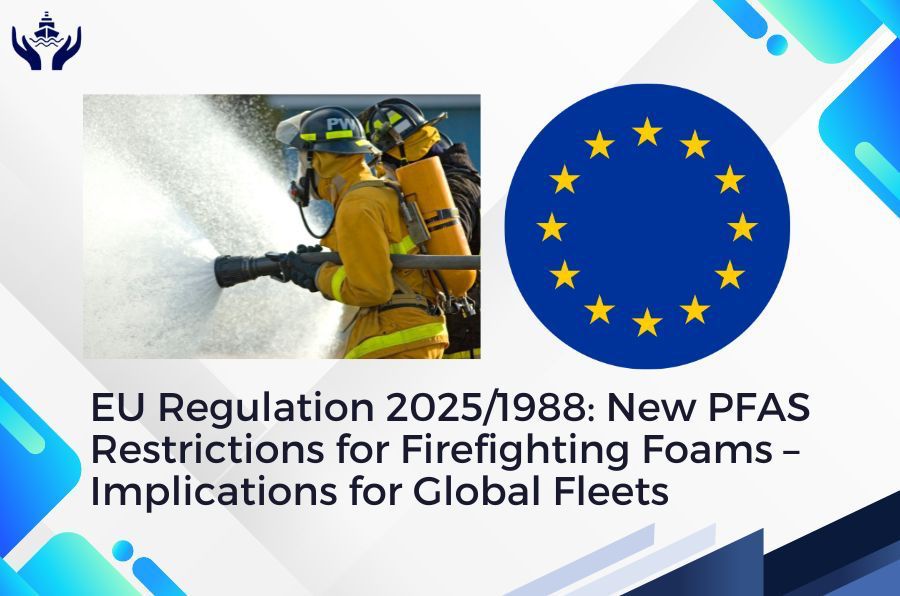
The European Union has formally adopted Regulation (EU) 2025/1988, introducing comprehensive restrictions on PFAS (including PFOS, PFOA, PFHxS) in firefighting foams used on vessels. This regulation represents one of the most significant compliance changes for the maritime sector in recent years.
Key Point: This regulation applies to all vessels calling EU ports, irrespective of flag, ownership, or trading pattern.
All firefighting foams must comply with a maximum limit of 1 mg/L (Total PFAS). Compliance will be determined through Total Fluorine (TF) analysis, now the preferred EU testing methodology.
Assessment of foam concentrates, fixed systems, and portable extinguishers on all vessels.
Total Fluorine Analysis to verify PFAS levels meet the mandated threshold.
Implementation from October 2026 including documentation of handling, disposal, and substitution strategy.
All PFAS-containing foam must undergo approved treatment; biological treatment is prohibited.
Strategic planning to align with dry-dock schedules and operational constraints.
Verification by Port State Control, Classification Societies, and Flag Administrations.
This regulation significantly elevates the environmental and technical compliance expectations for fleet operators. Regulatory authorities will increasingly verify:
Documentation of compliance testing results
Traceability of all foam products onboard
Complete documentation of foam management
System transition and compliance schedules
Warning: Proactive compliance is essential to avoid operational delays, detentions, or enforcement actions at EU ports.
Comprehensive assessment of all foam concentrates, fixed systems, and portable extinguishers across your fleet.
Arrangement and coordination of laboratory testing using approved Total Fluorine analysis methodology.
Expert guidance on foam replacement and system compatibility with existing equipment.
Preparation of comprehensive management plans for compliance with regulatory requirements.
Complete documentation support for Class, Flag Administration, and Port State Control compliance.
Fleet-wide compliance planning aligned with operational schedules and dry-dock windows.