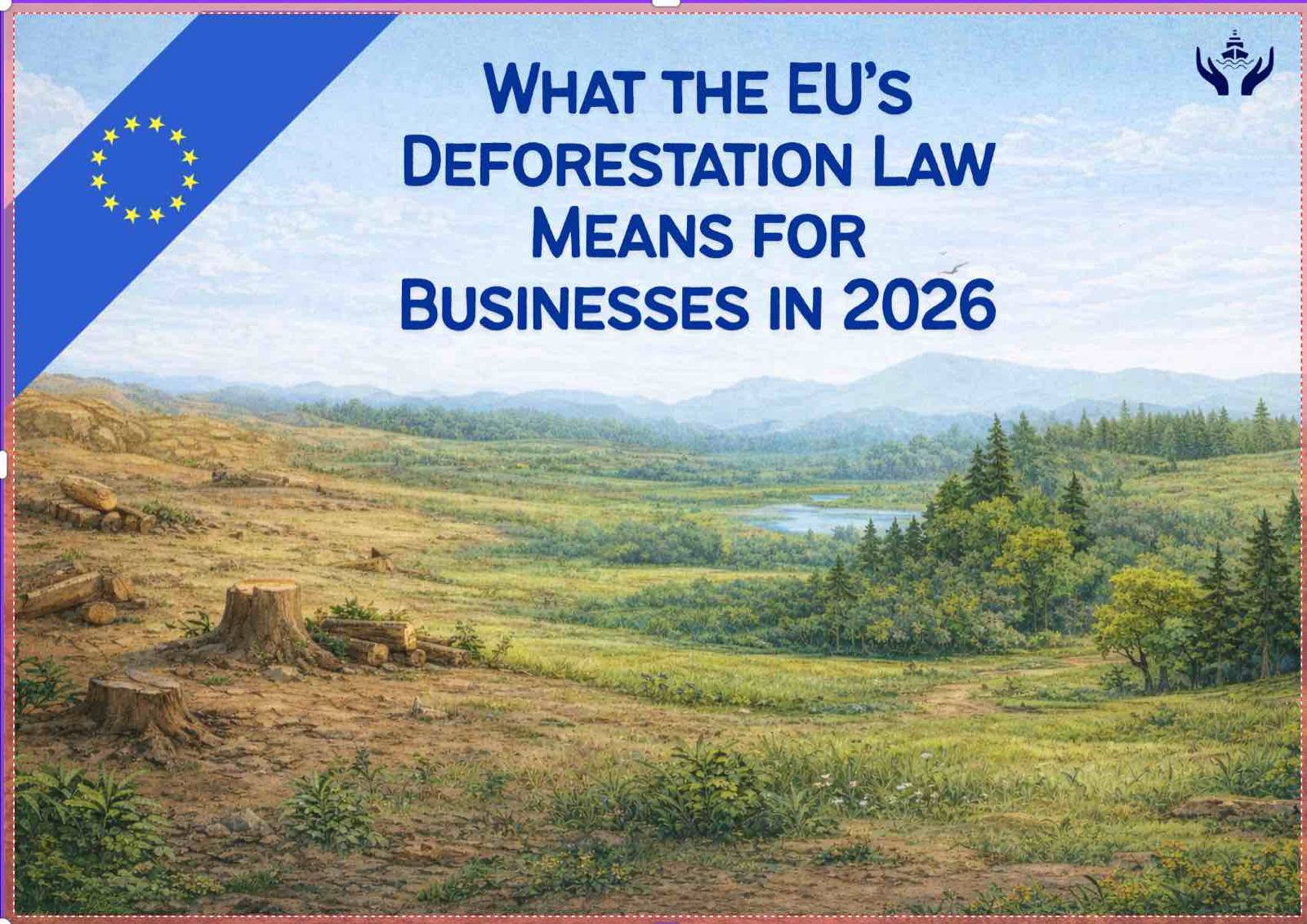
EUDR Explained: What the EU’s Deforestation Law Means for Businesses in 2026

Global supply chains are going through a major transformation --- and one of the biggest drivers of this change is the EU Deforestation Regulation (EUDR).

This regulation is not just another sustainability policy. It is a law that will directly impact how companies source raw materials, manage suppliers, and export products to the European Union.

What is EUDR?

The EU Deforestation Regulation (EUDR) ensures that certain commodities placed on or exported from the EU market are:

  • Deforestation-free
  • Legally produced
  • Fully traceable to the exact plot of land where they were grown or sourced

This means that companies must now prove that their products are not linked to deforestation after 31 December 2020.

Commodities Covered Under EUDR

The regulation applies to key forest-risk commodities such as:

  • Cocoa
  • Coffee
  • Palm Oil
  • Soy
  • Rubber
  • Timber
  • Cattle

Along with derived products like:

  • Chocolate
  • Leather
  • Furniture
  • Paper products

These goods cannot enter or leave the EU market unless companies can demonstrate compliance through proper due diligence.

What Do Companies Need to Do?

Under EUDR, companies must carry out a process called Due Diligence, which means they need to:

  1. Collect information about where the product comes from
  2. Check whether the land was deforested after 2020
  3. Assess the risk of deforestation
  4. Take steps to reduce that risk
  5. Submit a Due Diligence Statement before placing the product in the EU market

This means businesses must now have traceability in their supply chain --- from farm to final product.

Latest Update (December 2025 Revision)

On 4 December 2025, the European Parliament and Council reached an agreement to revise the EUDR to make implementation easier for businesses.

Key Changes:

Implementation delayed by one year

  • Large companies must now comply by 30 December 2026
  • Small and micro businesses by 30 June 2027

The delay was introduced because:

  • Companies needed more time to prepare
  • Authorities needed time to set up IT systems
  • There were concerns about readiness and administrative burden

Simplification of due-diligence rules

For example:

  • Only the first company placing the product in the EU market may need to submit the due diligence statement
  • Downstream traders may only need to pass on the reference number

An early review of the law's administrative impact is expected in 2026.

Why is EUDR Important?

The EU is responsible for around 10% of global deforestation through its imports of commodities like soy, beef, and palm oil.

This law aims to:

  • Reduce global deforestation
  • Cut greenhouse gas emissions
  • Protect biodiversity
  • Promote sustainable sourcing
  • Encourage responsible supply chains worldwide

It is considered one of the first regulations globally that links international trade directly with environmental protection.

Impact on Businesses

Companies exporting to the EU --- especially from countries like India, Brazil, Indonesia, and Malaysia --- must now:

  • Track supply chain data
  • Use geolocation information for sourcing
  • Ensure sustainable production
  • Maintain proper documentation

Failure to comply can result in:

  • Product bans
  • Financial penalties
  • Reputational risks

Conclusion

The EU Deforestation Regulation (EUDR) is a major step toward sustainable global trade. While the recent delay gives companies more time to prepare, businesses must act quickly to:

  • Improve traceability
  • Strengthen supplier engagement
  • Implement sustainability checks

In the future, regulations like EUDR may become the global standard, making sustainable sourcing not just an option --- but a requirement.

References

Contact Us

Need help with EUDR compliance or have questions about EU deforestation regulations? Our experts are here to assist you.

Reach out to Varuna Sentinels BV at contact@varuna-sentinels.com or visit our website www.varuna-sentinels.com