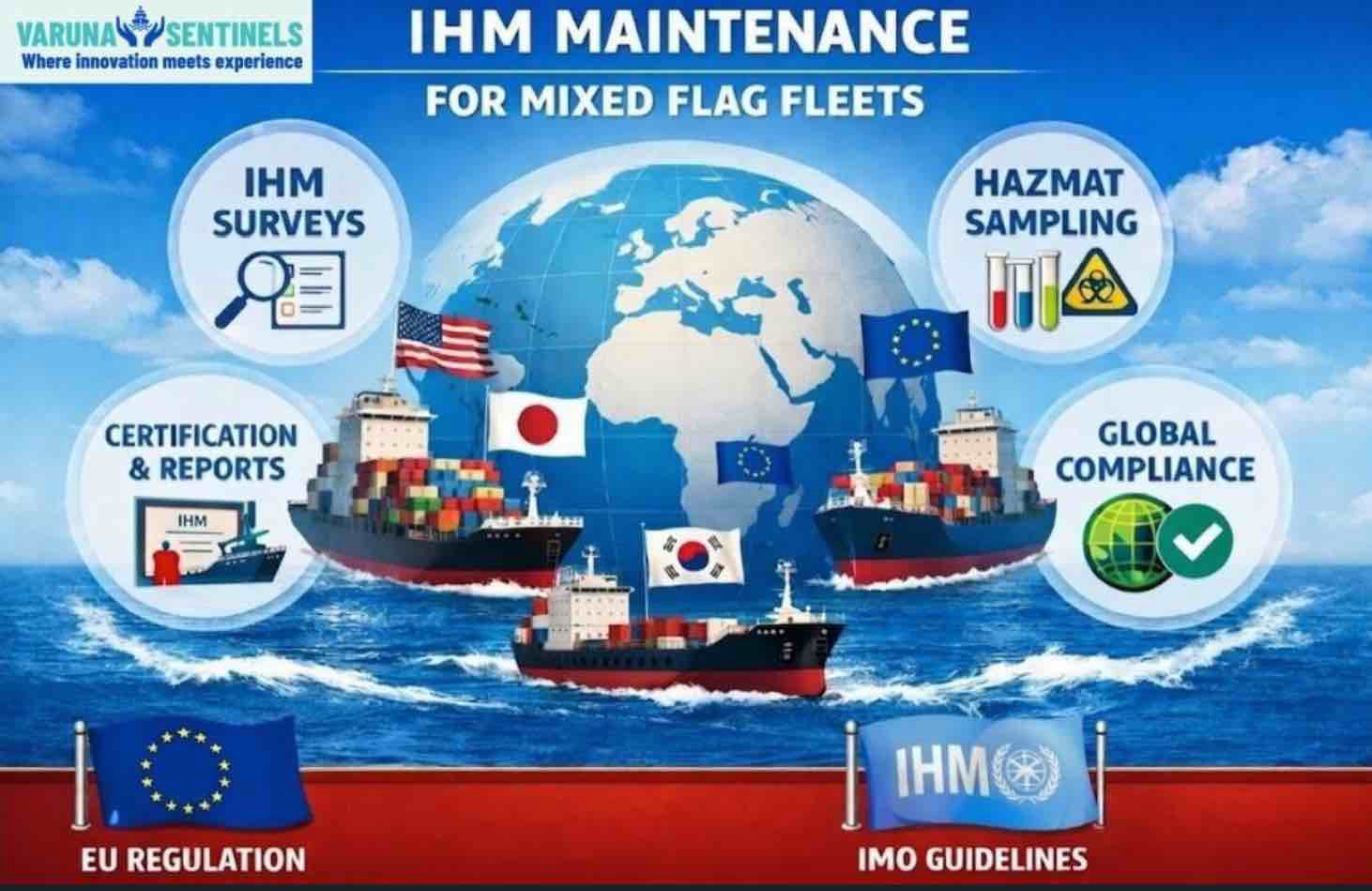
Managing IHM Maintenance for Mixed-Fleet Ships

Challenges and How Varuna Sentinels Can Help

In today's global shipping industry, many shipowners and ship managers operate mixed fleets — vessels sailing under different flag administrations and trading across multiple jurisdictions. While this structure offers operational and commercial flexibility, it also introduces significant compliance challenges, particularly when it comes to maintaining the Inventory of Hazardous Materials (IHM) Part I.

What Is a Mixed Fleet?

A mixed fleet typically refers to vessels operated by the same company but registered under different flag states. For example, a shipowner may operate vessels under Panama, Liberia, Marshall Islands, or Singapore registries.

Shipowners adopt this structure for several reasons:

  • Operational flexibility
  • Commercial and tax considerations
  • Charterer or financing requirements
  • Access to different trading routes and regulatory regimes

While beneficial, this structure can also make regulatory compliance more complicated, particularly when maintaining documentation such as the IHM.

Hong Kong Convention & IHM Requirements

With the entry into force of the Hong Kong International Convention for the Safe and Environmentally Sound Recycling of Ships, shipowners must ensure that the IHM is not only prepared but also continuously maintained throughout the vessel's lifecycle.

For mixed fleets, this process can be more complex due to different operational environments, suppliers, and regulatory expectations.

Why IHM Maintenance Is More Challenging for Mixed Fleets

Although the IHM framework is internationally standardized, practical management can still be challenging. Shipowners managing mixed fleets often face the following issues:

1

Multiple Flag Administration Expectations

Different flag administrations may have slightly different documentation procedures or reporting expectations.

2

Frequent Equipment and Material Changes

Routine vessel operations involve frequent replacement of machinery parts, coatings, insulation, and other components. Each modification may affect the IHM.

3

Multiple Global Suppliers

Mixed fleets typically rely on suppliers across different regions. Ensuring that every supplier provides accurate Material Declarations (MD) and Supplier's Declarations of Conformity (SDoC) can be difficult.

4

Fragmented Documentation

Without a centralized system, IHM updates may be stored across different departments, vessels, or formats, increasing the risk of missing updates.

5

Port State Control Inspections

Under Article 8 of the convention, authorities may conduct detailed inspections if a vessel does not have an acceptable system for maintaining its IHM.

Why Continuous IHM Maintenance Is Essential

Many shipowners focus primarily on obtaining the initial IHM Part I certification, but compliance is an ongoing process. The IHM must be updated whenever equipment, materials, or coatings containing hazardous substances are added, removed, or replaced.

If the IHM is not properly maintained, shipowners may face:

  • Deficiencies during inspections
  • Increased administrative workload
  • Operational delays
  • Compliance risks during recycling preparation

For mixed fleets, managing these updates across multiple vessels and jurisdictions can become resource-intensive without the right support.

How Varuna Sentinels Supports Mixed-Fleet IHM Maintenance

At Varuna Sentinels BV, we understand the unique challenges that shipowners face when managing IHM compliance across mixed fleets.

Our team specializes in providing structured and efficient IHM maintenance services, helping shipowners maintain accurate documentation throughout the operational life of their vessels.

Our support includes:

Centralized IHM Maintenance Management

We help shipowners manage IHM documentation across their entire fleet through a structured and organized approach, ensuring consistency and traceability.

Supplier Documentation Verification

Our team reviews Material Declarations (MD) and Supplier's Declarations of Conformity (SDoC) to ensure that all newly installed equipment complies with regulatory requirements.

Continuous IHM Updates

Whenever equipment or materials are replaced onboard, we assist in updating the IHM documentation so that the records always reflect the vessel's current configuration.

Regulatory Compliance Support

We help shipowners align their IHM maintenance practices with the requirements of the Hong Kong International Convention and prepare for inspections.

Technical Expertise and Industry Experience

Our specialists work closely with technical, procurement, and HSQE teams to ensure that IHM updates are handled efficiently without disrupting vessel operations.

Conclusion

Operating a mixed fleet is a practical and common strategy in modern shipping, but it requires careful attention to regulatory compliance. With the global enforcement of the Hong Kong International Convention for the Safe and Environmentally Sound Recycling of Ships, maintaining an accurate and continuously updated Inventory of Hazardous Materials has become a critical responsibility for shipowners.

By adopting a structured maintenance approach — and partnering with experienced specialists like Varuna Sentinels BV — shipowners can simplify IHM management, reduce compliance risks, and ensure their vessels remain inspection-ready at all times.

Contact Us

Need help with IHM maintenance for your mixed fleet or have questions about compliance? Our experts are here to assist you.

Reach out to Varuna Sentinels BV at contact@varuna-sentinels.com or visit our website www.varuna-sentinels.com