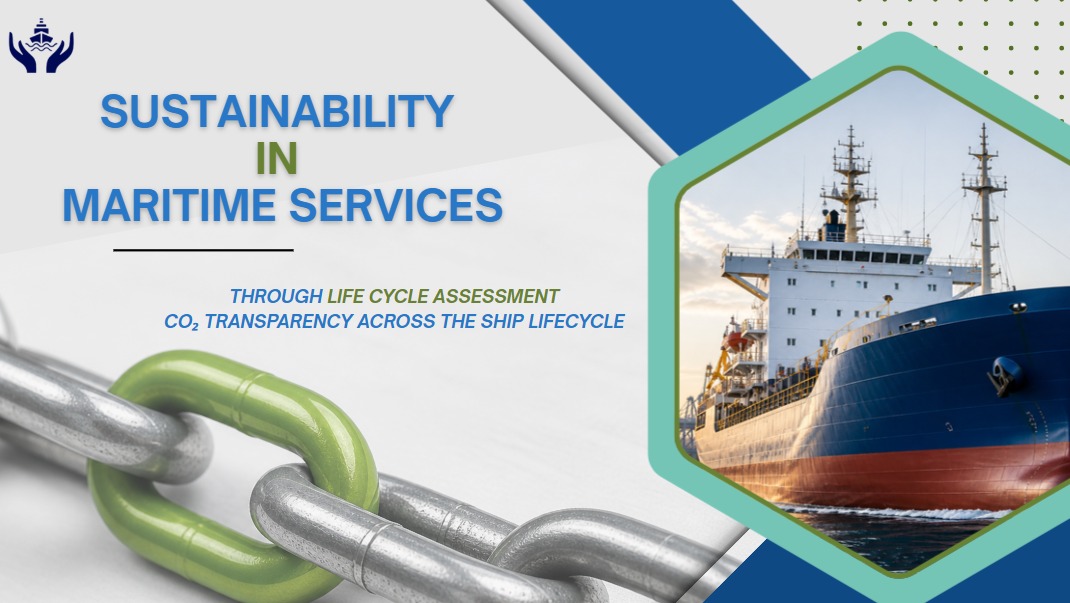
Today, shipowners and operators are under increasing pressure to understand and report full lifecycle CO₂ emissions, including those embedded in shipbuilding materials such as steel. This shift is driving the need for end-to-end lifecycle visibility, where Life Cycle Assessment (LCA) plays a critical role — not just as a methodology, but as a decision-making tool for ESG, compliance, and circularity.
Traditional sustainability efforts in shipping have focused primarily on fuel consumption and voyage emissions. However, a significant portion of a vessel’s environmental impact originates before it even enters service — particularly from steel production, equipment manufacturing, and supply chains.
Why Lifecycle CO₂ Tracking Matters
- Capturing emissions from construction to recycling (cradle-to-cradle)
- Identifying hidden carbon hotspots in shipbuilding
- Enabling informed decisions on materials and sourcing
Where Hidden Emissions Live
- Steel production for hull, structure and equipment
- Manufacturing of components, machinery and outfitting
- Supplier-tier emissions across the global supply chain
The shift: Sustainability in shipping is moving from a fuel-only conversation to a full lifecycle conversation — and LCA is the bridge that makes it possible.