Reducing Total CO₂ Through Lifecycle Optimization

A Strategic Advantage for Shipowners

The shipping industry is entering an era where sustainability isn't optional—it's a business imperative. Varuna Sentinels provides a comprehensive Life Cycle Assessment (LCA) framework, measuring total CO₂ emissions from ship construction, operations, and recycling.

Why LCA Matters in Today's Sustainability-Driven World

Shipping contributes significantly to global greenhouse gas emissions. Traditional metrics often focus only on fuel consumption during operations, overlooking **emissions embedded in construction materials or end-of-life recycling**.

LCA changes that by providing a **cradle-to-grave view** of a ship's carbon footprint. For shipowners, this is not just about environmental responsibility --- it's about **informed investment, operational efficiency, and long-term value creation**.

Key Stages of LCA: Cradle-to-Grave Explained

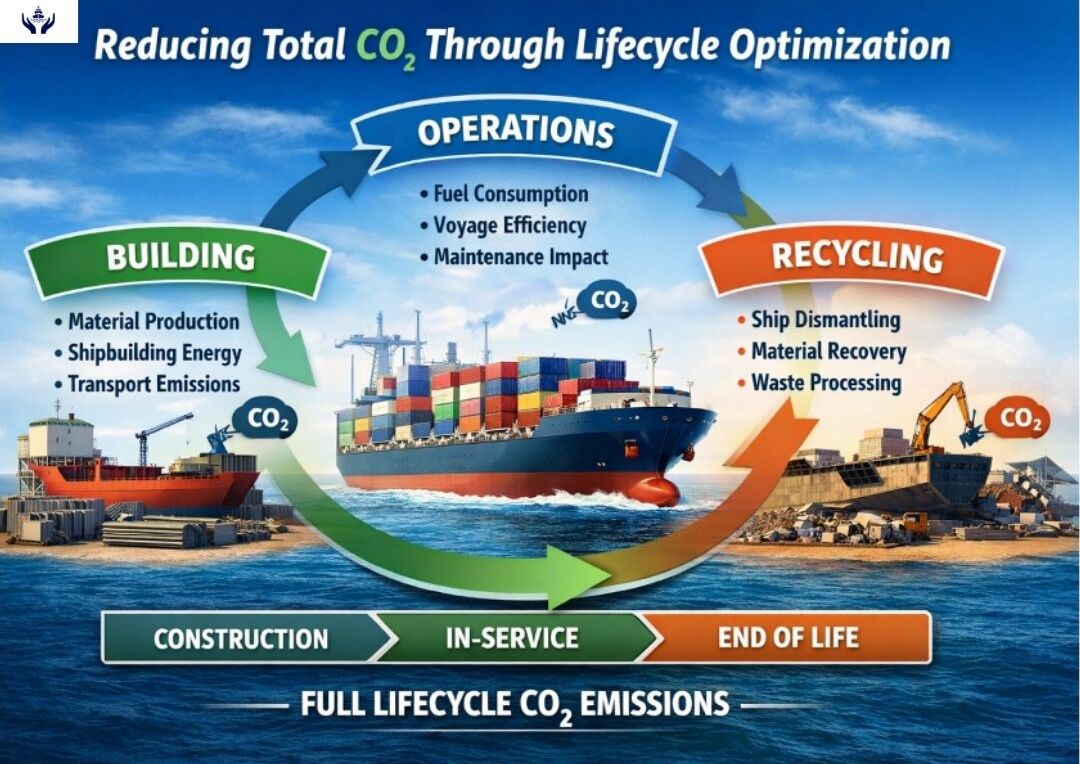
Varuna Sentinels evaluates emissions at every stage of a ship's life:

1. Construction

  • Steel, aluminum, composites, and shipyard energy use contribute significantly to a vessel's early carbon footprint.

2. Operations

  • Fuel consumption, engine efficiency, maintenance, and routing strategies are quantified to reveal operational hotspots.

3. Recycling / End-of-Life

  • CO₂ from dismantling, material recovery, and disposal is included, enabling circular economy strategies.

By combining these stages, we provide a **total lifecycle CO₂ figure**, empowering shipowners to make data-driven decisions for sustainability and cost reduction.

How LCA Supports Green Ship Design and Fuel Selection

Optimizing a ship for low-carbon operations starts before it ever sails. LCA insights enable owners to:

  • Choose **low-carbon or recycled materials** during construction
  • Select **fuel options with lower lifecycle GHG intensity** (biofuels, LNG, ammonia, e-fuels)

This ensures vessels are **built and operated efficiently**, reducing emissions over decades of service.

LCA in Ship Recycling -- Ensuring Sustainable End-of-Life

End-of-life management is often overlooked, yet it can significantly influence a ship's **overall environmental impact**. LCA allows owners to:

  • Maximize **material recovery** (steel, aluminum, electronics)
  • Minimize emissions from dismantling processes
  • Partner with responsible recycling yards to ensure **compliance and ESG credibility**

How LCA Supports IMO and EU Sustainability Regulations

Regulatory compliance is no longer optional. LCA aligns ship operations with:

  • **IMO GHG Strategy** -- supporting decarbonization targets through lifecycle emission insights
  • **EU MRV / ETS** -- providing accurate CO₂ data for monitoring, reporting, and emissions trading

This means owners and operators can **demonstrate compliance while optimizing operations**.

LCA's Role in ESG Reporting and CSRD Compliance

Investors and stakeholders now demand transparency. Our lifecycle CO₂ assessments feed directly into **ESG reporting**, helping companies meet **CSRD and sustainability disclosure obligations**. LCA demonstrates **accountability and leadership**, enhancing credibility and investor confidence.

CBAM and LCA -- Connecting International Trade and Carbon Management

The EU's **Carbon Border Adjustment Mechanism (CBAM)** underscores the importance of embedded emissions. LCA equips shipowners to:

  • Calculate the **true carbon intensity of their vessels**
  • Identify risks and opportunities in **international trade**
  • Make **strategic, low-carbon operational decisions**

Using LCA to Reduce Costs and Environmental Impact

LCA isn't just about compliance --- it identifies **high-impact interventions** that save money:

  • **Fuel efficiency improvements** reduce operational costs
  • **Material optimization** lowers construction expenses
  • **Recycling strategies** generate value and reduce waste management costs

The result is a **ship that is both profitable and sustainable**.

LCA for Circular Economy and Sustainable Supply Chains

By integrating LCA, shipowners can design vessels that **support circular economy principles**:

  • Reusable and recyclable materials
  • Design-for-disassembly strategies
  • Reduced total lifecycle emissions

This strengthens supply chain sustainability and positions companies as **leaders in low-carbon maritime innovation**.

Conclusion

For shipowners and fleet managers, **LCA is no longer optional --- it's a strategic advantage**. By understanding total CO₂ emissions across construction, operations, and recycling, Varuna Sentinels empowers clients to **optimize ships for sustainability, compliance, and financial performance**.

Investing in lifecycle optimization today ensures **lower costs, regulatory alignment, and competitive advantage** tomorrow.

Contact Us

Need help with CBAM compliance or have questions about EU carbon regulations? Our experts are here to assist you.

Reach out to Varuna Sentinels BV at contact@varuna-sentinels.com or visit our website www.varuna-sentinels.com