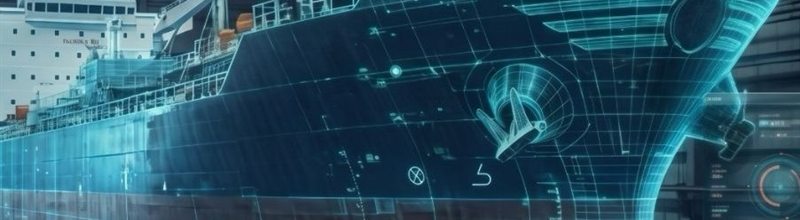

Accident Prevention
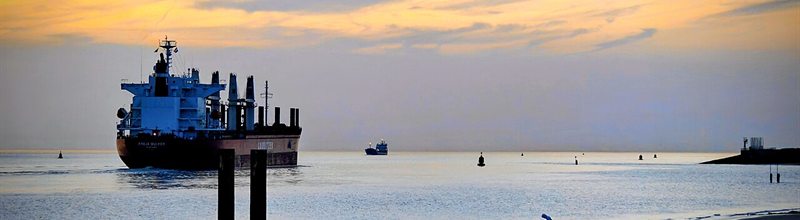
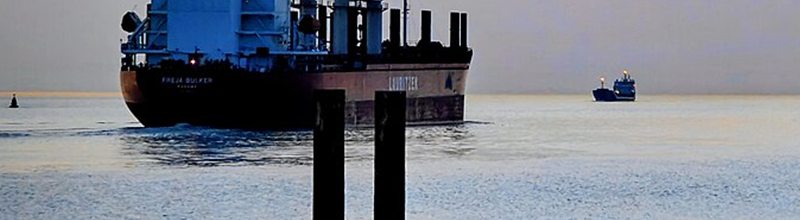
This course explores the shared responsibility at sea - across all roles on the ship - in accident prevention.
Comprehensive maritime compliance training platform by Varuna Sentinels BV. Configure training, onboard teams, certify competency — all with class approval from 8 major classification societies.
From training configuration to certificate issuance — a seamless end-to-end flow
Varuna Sentinels BV as Global Admin creates and configures all marine training modules with content, assessments, and certification criteria
Global Admin creates Company Admins for each shipping company, granting them access to manage their organization's training
Company Admin onboards crew members and employees, creating user accounts and assigning relevant training courses
Company Admin assigns specific training modules to users based on their roles, vessel type, and compliance requirements
Trainee user logs into the CBT portal with their credentials and views all assigned training courses on their dashboard
Trainee goes through interactive training modules — videos, documents, quizzes, and practical content on maritime compliance
After completing all training content, trainee takes the certification test based on the criteria set during training configuration
Upon passing, the trainee receives a Varuna Sentinels BV completion certificate referencing the module code, syllabus, assessment score and issuance date for the trainee’s records
Three levels of access ensuring secure and efficient training management
Varuna Sentinels BV manages the entire platform
Shipping company manages their team's training
Crew members complete their assigned training
Every active maritime training in the Varuna Sentinels CBT library — covering safety, navigation, engineering, cargo handling, environmental compliance, cyber security, leadership, and STCW core competencies. Search to find a course; enrol your fleet via the CBT Portal.
This course explores the shared responsibility at sea - across all roles on the ship - in accident prevention.

The course explores the proper procedures and use of equipment during ship anchoring operations to ensure safety especially in perilous weather conditions.

This course provides useful information about bribery and corruption; enhances ability to recognise warning signs; implements preventive measures; and understands how businesses can mitigate the risks...

Gain the essential skills to inspect ballast tanks with confidence! This course covers preparation, execution, and documentation of inspections to uphold vessel safety and structural integrity. Learn ...

Masters, Chief Engineers, BWM officers | Intermediate | Environmental

This course equips participants with the right tools and knowledge required to promote and ensure a safer working environment onboard the ship.

The Betreden van Besloten Ruimte course explains ADN safety regulations for dry cargo and tanker shipping. Learn about enclosed space hazards, gas measurement, and proper protective equipment selectio...

Keep your vessel efficient and eco-friendly with expert insights on biofouling management! This course covers IMO regulations, best practices, and preparation strategies to minimize biofouling risks. ...

Masters, Chief Mates, Officers-of-the-Watch (deck) | Mandatory STCW | STCW Core

This e-course aims to equip participants with comprehensive knowledge and understanding of the safe use, identification, classification, and transportation of chemicals.

Masters, Chief Engineers, technical managers, DPA | Intermediate | Decarbonisation

Sustainability managers, newbuild / retrofit teams, procurement | Awareness-Intermediate | ESG & Reporting

This course - through a deep dive on rules, applications, and situations - examines the international regulations for preventing collisions at sea.

This course introduces general knowledge and understanding about the compression of gases.

All officers and ratings (STCW A-II/1, A-II/2, A-III/1, A-III/2) | Mandatory STCW | Environmental

The primary objective of this e-course is to equip participants with essential knowledge to safeguard themselves and their colleagues, prevent workplace accidents, and ensure a hazard-free work enviro...

Boost your expertise in crane operations with this essential training! Learn about different crane types, safe handling, preventive maintenance, and troubleshooting to keep operations smooth and accid...

This course deals with the processes and procedures to respond to and mitigate the effects of a crisis situation that may occur on a ship which include fires, flooding, medical emergencies, etc.

This course builds the disciplined application of practical skills that direct a crowd, both passengers and crew, in the event of an emergency. (Based on IMO model course – STCW compliance)

Gain essential knowledge of Crude Oil Washing with expert-led training on essential techniques, equipment, and best practices. Learn to carry out COW operations safely, efficiently, and in full compli...

Sustainability managers, finance, compliance, executive leadership | Intermediate-Advanced | ESG & Reporting

This course aims to increase awareness about cultural differences and diversity on board; and how to approach such differences with respect. Participants will develop skills that will help them increa...

Masters, mates, DG-responsible officers, cargo planners, stevedores | Mandatory IMDG | STCW Core

This course aims to provide participants with the proper theoretical knowledge around deck maintenance, adequate preparation and painting.

This course provides a concise yet comprehensive overview of dry dock safety. You will learn the basics of dry dock operations, types of dry docks, planning considerations, block usage, stability calc...

Be drill-ready and safety-focused with this essential course! Learn how to plan, conduct, and evaluate onboard drills—from fire and abandon ship to enclosed space entry—all while ensuring compliance w...

Boost your ship's performance with confident, effective engine room rounds. This course teaches maritime professionals how to inspect machinery, log observations, and maintain safety and compliance th...

Stay audit-ready and compliant. This course guides maritime professionals in conducting effective inspections and audits, covering preparation, execution, and follow-ups in line with ISM, SOLAS, MARPO...

Discover how electric propulsion is transforming modern shipping! This course breaks down key components, principles, and operational concepts, from power electronics to shipboard systems. Gain a soli...

This e-course is designed for professionals who manage and operate systems in potentially explosive atmospheres.

This course focuses on test Instrumentation and its value in providing a visual understanding of system operations, ensuring safety and making informed decisions.

This course amasses the hazards associated with electricity so as to equip you with the knowledge and skills necessary to work safely with electricity both in the workplace and at home.

This course will provide you with essential knowledge and skills for emergency towing situations. It will help you to understand the significance and components of ETA, learn maintenance and inspectio...

This course specifies the hazards of working in an enclosed space and assists you in establishing and maintaining an effective confined space program.

This course delves into the principles of automation, offering a foundational overview of the shipboard automation systems.

Chief Engineers, 2nd Engineers, Engineer OOWs | Mandatory STCW | STCW Core

Masters, Chief Engineers, DPA, superintendents, commercial teams | Intermediate | Decarbonisation

The course takes a closer look at the usage of water (Small Boat Operations and Submersible Operations) and airborne operations (Helicopter Operations) for normal expeditions & polar expeditions.

The course explores both fatigue and stress of ship personnel to develop better coping strategies and to create a stronger safety net, reducing the likelihood of errors, slips, or lapses in judgement.

This course assists in determining the cause of mechanical and electrical problems/failures, which can be considered a part of a marine engineer’s proficiency.

This course examines the fire quadrangle, pyrolysis, the neutral layer, and the significance of mixing ratio and their impact on fire behaviour. It will clarify how fires can spread through various me...

This course provides comprehensive training that covers everything from the regulations governing food safety on cargo ships to the practical aspects of food handling, storage, and hygiene.

This course offers you an in-depth understanding of Framo systems on ships, covering types and components, operating principles, and cargo handling procedures. You will learn about maintenance, inspec...

This course compiles the best industry practices along with procedures of fuel oil bunkering.

All crew (ships ? 100 GT or carrying ? 15 persons) | Awareness | Environmental

This course provides an explanation for appropriate portable atmosphere testing instruments aboard your ship (i.e. concentrations of oxygen, flammable gases, hydrogen sulphide and carbon monoxide).

This course on the Global Maritime Safety and Maritime Safety (GMDSS) underscores the maximum accessibility of communications related to the safety of all ships, passengers, and cargo.

Safeguard your ship and cargo with expert knowledge on hatch cover maintenance. This course covers inspection, repairs, leak prevention, and compliance with international regulations, ensuring your ve...

This course assembles general knowledge and uses of high voltage in the maritime industry.

This course enhances the hazard and risk-seeking capabilities of your ship staff to carry out the job safely in spaces involving electric arc, welding equipment and heat and spark generating tools.

This comprehensive safety course is designed to educate workers in the oil and gas industry about the hazards associated with hydrogen sulphide (H2S) and equip them with the knowledge and skills to pr...

This course enhances your awareness of various IALA marks and introduces the foundational regulations for safe and effective navigation within VTS areas.

Braving the ice? Learn how to navigate safely through polar waters with confidence and precision. This course builds essential awareness for operating in icy conditions, enhancing safety and preparedn...

This course delves on the minimum standard of competence in advanced training for ships subject to the IGF Code.

This course delves on the minimum standard of competence in basic training for ships subject to the IGF Code.

IHM Designated Person, superintendents, senior officers | Intermediate | IHM Designated Person

Ensure safe and compliant gas operations on tankers and gas-handling vessels. This course covers inerting, purging, and gas-freeing procedures with a focus on safety, risk management, and regulatory c...

The course highlights the role of an infection control officer to prevent and apply measures for infectious diseases that can protect the health of the communities the places your ship visits.

This course draws attention to a vessel's intact stability as a fundamental component of seaworthiness.

Navigate the complexities of bulk cargo transport with confidence. This course on the IMSBC Code (BC Code) covers cargo classification, regulatory requirements, and safety procedures to prevent hazard...

The course updates the knowledge of your ship and shore personnel on the amendments and new regulations added in the 2018 edition of the ISM Code i.e. the vessel’s daily activities and precautions.

The course collates the fundamental principles for a refined azimuthal propulsion usage.

This course extensively elaborates on the practical issues associated with the use of Electronic Chart Display and Information System (ECDIS) in the maritime industry.

This course examines the various environmental management systems and its impacts, and enhances your company's business environmental performance.

This course inquires on the minimum standard of practice to uphold your employees' health and occupational safety at the workplace.
The course aims to establish a relation between the ISO standards for Quality systems and make the candidates understand the effectiveness of the ISM Code in the running of a maritime organization.

This course provides participants with the proper theoretical knowledge around intent-based leadership, its impact and benefits in daily life activities and how to enforce it better onboard.

Technical managers, Chief Engineers, sustainability teams, naval architects | Intermediate | Decarbonisation

This course provides a comprehensive understanding of thermal runaway and the primary safety concern associated with lithium-ion batteries.

This course provides you with essential skills to maintain life-saving appliances on board. It explains the significance of LSA, identify different types and components, and cite SOLAS and LSA Code re...

The course investigates the findings of the Anti-Corruption Network and identifies the measurements being taken for the maritime anti-corruption culture.

This course examines how incident investigations can help prevent future accidents by exploring professional techniques and terms used in the process, such as identifying causes and effects.

The Maritieme Cybersecurity Bewustzijn course introduces common cyberthreats in the maritime sector. Learn to identify risks, understand potential targets, and protect ships from operational, safety, ...

All seafarers & shore staff with ICT access | Awareness | Cyber

This course provides practical guidance on successful communication and standard phraseology in the maritime industry, while introducing basic terminology and explaining the evolution of maritime Engl...

This course emphasises the importance of your seafarers' physical and mental health through improving your ship's working environment by recognizing harrassment and bullying.

The course spotlights your rights at work, including employment terms, health and safety, living and working conditions, and access to medical care and social security as a seafarer.

This specialized course focuses on bringing awareness to your mental health and prevention of poor mental health by exploring ways to support your fellow crew.

This course provides you the right instruments to safely and efficiently conduct a mooring operation in line with the latest industry-standard (MEG 4) and IMO requirements.

This course provides you practical mooring winch maintenance training, covering identification, scheduling, and troubleshooting. With a focus on safety, regulations, and real-life examples, participan...

This course, provided by NAPA, is designed to furnish you with fundamental knowledge and proficiency in basic stability concepts.

This course, provided by NAPA, is designed to furnish you with fundamental knowledge and skills in basic stability concepts that should be followed while in port.

This course, provided by NAPA, is designed to furnish you with fundamental knowledge and skills in basic stability concepts that should be followed while at sea.

This course, provided by NAPA, is designed to furnish you with fundamental knowledge and skills in basic stability concepts that should be followed in the event of damages.

Navigate the challenges of life at sea with the right nutrition and well-being strategies! This course equips maritime professionals with essential knowledge on balanced diets, hydration, and healthy ...

This training equips the participants with the knowledge to operate, troubleshoot, and maintain ODME systems in compliance with international regulations, contributing to a safer and more sustainable ...

This course gives you a background of the OPA 90 framework and the specifics of the vessel response plan. It also discusses the necessary steps in case of a threat or an actual oil spill incident in U...

The course provides you with correct procedures for filling up the ORB Part I entries which include the correct rows and columns.

This course heightens your awareness regarding oil-water separators, their environmental impact, and associated regulations.

Chief Engineer, refrigeration engineer, electro-technical officer | Intermediate | Environmental

The course enumerates the systematic PTW procedures to help you identify, communicate, mitigate, and control risk in hazardous areas, nonstandard situations, and potentially hazardous conditions.

This course illustrates the crucial role of PPEs in the complete chain of security practices to protect you and your fellow seafarers from injuries.

All seafarers (initial & refresher) | Mandatory STCW | STCW Core

The aim of this course is to equip people with the necessary knowledge and practical skills to ensure their safety when working or living in cold environments.

This course cover essential elements when transferring personnel between vessels and installations using personnel baskets. Personnel transfer has been common practice in the offshore oil and gas indu...

Chief Officer, Chief Engineer, safety officers, superintendents | Intermediate | Hazardous Materials

This course aims to provide practical skills to ensure the safety and efficiency of pilot transfers. The course uses real incidents as case studies, initiating the assessment of safety risks, pilot tr...

This e-course aims to provide comprehensive knowledge of pilotage, a critical aspect of maritime safety. It will give you an in-depth understanding of the roles, responsibilities, and impact of mariti...

The course informs you of the best practices when navigating areas where piracy is present.

This course extends your fundamental knowledge and competence on vessels in polar waters as senior navigating officers.

This course equips you with the fundamental knowledge on operation in low temperatures, cold climate, and polar waters.

The aim of this course is to enhance the knowledge, skills, and awareness of crew members, ultimately contributing to the safety, security, and environmental sustainability of the maritime industry wh...

This course provides a comprehensive understanding of protection and indemnity in the maritime industry, emphasizing its historical evolution, significance in marine insurance, and its pivotal role in...

This course equips participants with a comprehensive understanding of the regulations, safety protocols, and best practices in transporting radioactive materials.

This course accentuates the hazards and risks associated with lifting and rigging operations.

Learn the essentials of maritime risk classification through Hazard Identification, Risk Assessment, and Control (HIRAC). Gain the skills to identify hazards, assess risks, and apply effective control...

This course is based on maritime industry standards and covers: the difference between Hazard and Risk, how to implement different control measures and how to comply with a Risk Assessment.

Chief Engineer, Chief Officer, safety officers | Intermediate | Hazardous Materials

This specialized course reviews your role, duties, and responsibilities as a Safety Officer onboard.

This course features the know-how when performing your duties and responsibilities of a Search and Rescue On-Scene Coordinator (OSC) for a search and rescue incident.

This course imparts you with the responsibilities and duties as an officer assigned under the Ship Security Plan (SSP).


The course compiles the fundamental principles of shiphandling which include pivot point, forces, wind and current etc.

Superintendents, technical managers, shore staff, senior officers | Beginner-Intermediate | Ship Recycling

This course follows the Ship Security Officer IMO model course. It gathers insight into your responsibilities as the designated Ship Security Officer (SSO).

Transferring cargo between ships? Learn to do it safely and efficiently. This course covers STS operations for crude oil, petroleum products, chemicals, and liquefied gases—at sea or in port. Master b...

This course presents the new SIRE 2.0 system which utilizes digital technology and an online reporting portal. The SIRE 2.0 process places greater emphasis on the role of human factors and management.

This course presents the new SIRE 2.0 system which utilizes digital technology and an online reporting portal. The SIRE 2.0 process places greater emphasis on the role of human factors and management.

The course itemizes information on how to prevent slips, trips and falls, how to assess risks and how to deal with possible injuries on board.

The course dispenses useful advice when dealing with media professionals and social media in general in case of a maritime incident or crisis.

The Social Media en Crisismanagement course builds professional skills in managing risks on social media. Learn to protect your image, use platforms responsibly, and communicate effectively with the m...

The course expounds on the Shipboard Oil Pollution Emergency Plan. It delineates the overview and procedures that you should follow in the event of an oil spill from the ship.

All seafarers seeking initial certification | Mandatory STCW | STCW Core

The course is part of a bigger series of firefighting courses. This course in particular defines fundamental knowledge and information on fire safety.

This course is divided into two parts. The first part prepares you with the theoretical knowledge needed to understand the IMO Onboard Assessment Model Course 1.30 and STCW Regulations. The second par...
This specialized course provides you with the practical knowledge of proven didactical principles and how to apply them appropriately to achieve specific training objectives.

This course delves into the intricacies of food microbiology, emphasizing the types of diseases, their transmission cycles, and prevalent pathogens leading to human diseases and infections. It is desi...

This course provides a deeper look into food safety and what it means to serve “safe” food. It specifies the CDC-VSP 2018 Operational Manual requirements in food safety.

This course provides an introductory course into safe food facility areas and how to keep high public health standards throughout all areas of the equipment.

This course delves into essential information about potable water. It discusses waterborne illnesses and diseases as they pose a threat to public health all over the world.

This course is meticulously structured into key sections encompassing water chemistry, circulation, signage, filtration, and monitoring.

This course examines the system of environmental regulations designed to reduce pollution by vessels visiting US ports or operating in US waters.

This course probes voyage planning principles, including all the stages and relevant maritime regulations.

This course on welding and gas cutting can provide participants with a comprehensive understanding of these critical industrial processes, promote safety awareness, and equip them with practical skill...

The course generates awareness amongst vessel crew and officers about the latent hazards while working at heights, the precautions necessary and the importance of not improvising working gear. Copyrig...
Course thumbnails are client-safe assets licensed to Varuna Sentinels BV by our content partners. Course names and descriptions reflect the active CBT library on file at the date above. All trademarks, classification-society names and regulatory instruments referenced are the property of their respective owners. © Varuna Sentinels BV.
Built for maritime compliance excellence
Certificates recognized by 8 major classification societies worldwide
Rich training modules with videos, documents, and interactive assessments
Real-time dashboards showing training completion and assessment scores
Separate environments for each shipping company with centralized control
Access training from any device — desktop, tablet, or mobile
Generate detailed training compliance reports for audits and inspections
Module syllabi are authored from publicly available IMO, EU Commission and ISO reference texts. Each module cites the primary regulation, guideline or standard it teaches — so Designated Persons, ship managers and trainees can trace every learning outcome to its source.
Varuna Sentinels BV is not a classification society. Module references to IMO, EU, ISO and IACS member societies (DNV, Lloyd’s Register, Bureau Veritas, ClassNK, ABS, RINA, CCS, KR, IRS) are factual citations of publicly available source material and do not imply endorsement, partnership or certification by those organisations.
Composite scenarios drawn from training engagements across the global maritime community
We rolled out the CBT portal across our entire fleet of 45 vessels within two weeks. The module syllabi map directly to our EUSRR & HKC training matrix, so our Port State inspection files now include completion records, assessment scores and source-regulation citations for every trainee. What impressed us most was how easily our crew adapted to the platform — even those with limited technical experience completed their IHM training without any issues.
As a DPA overseeing hazardous materials compliance, the CBT portal has been a game-changer. The real-time tracking dashboard lets me see exactly who has completed their training and who needs follow-up. During our last EUSRR audit, the class surveyor reviewed our training records and certification documentation — all generated directly from the platform — and found the audit trail straightforward to verify.
Managing training for 1,200+ seafarers across multiple vessels was a logistical nightmare before we adopted Varuna Sentinels' CBT platform. The multi-tenant setup means each of our regional offices can independently manage their crew while we maintain oversight at the head office. The compliance reports have cut our audit preparation time by nearly 60%.
I completed the IHM awareness training while onboard during a 28-day voyage. The content was practical and directly relevant to what we deal with during vessel operations — identifying hazardous materials, understanding the inventory, and proper handling procedures. The completion record with module code, syllabus and assessment score went straight into my personal continuous professional development file.
What sets this platform apart is the quality of training content combined with class approval from eight major societies. We evaluated several CBT solutions before choosing Varuna Sentinels, and no other provider offered this breadth of classification recognition. The onboarding support was exceptional — our Company Admin was set up and assigning courses within a single day.
The CBT portal helped us stay ahead of the Hong Kong Convention requirements. Our entire shore-based and sea-going staff completed their hazardous materials awareness training within the first month. The automated certificate generation and expiry tracking ensures we never miss a renewal. It has become an integral part of our safety management system.
Get started with Varuna Sentinels CBT Portal — the trusted maritime compliance training platform
Login to CBT Portal ContactDrawn from publicly available references, presentations and industry events — serving the global maritime community across ship owners, managers, operators and suppliers.
50+ Industry References

.png)













Latest insights on maritime compliance, sustainability & industry trends
Our newest videos — auto-updating straight from the Varuna Sentinels YouTube channel.
Tell us a little about your fleet and we will reply within one business day with course details, pricing for your fleet size, class-approval evidence, and live-demo options.