- 3overlapping regimes — EU ETS, FuelEU Maritime and CII/EEXI
- 2platforms, one workflow — VSMPS sourcing and LCAP carbon data
- Cradle‑to‑uselifecycle carbon behind every sourcing decision
- 1audit-ready record for charterers, class and internal audit
A vessel’s compliance performance is no longer decided only during audits or onboard operations. Increasingly, it begins at the procurement stage — when shipowners and managers decide which supplier, component, consumable or service partner to select.
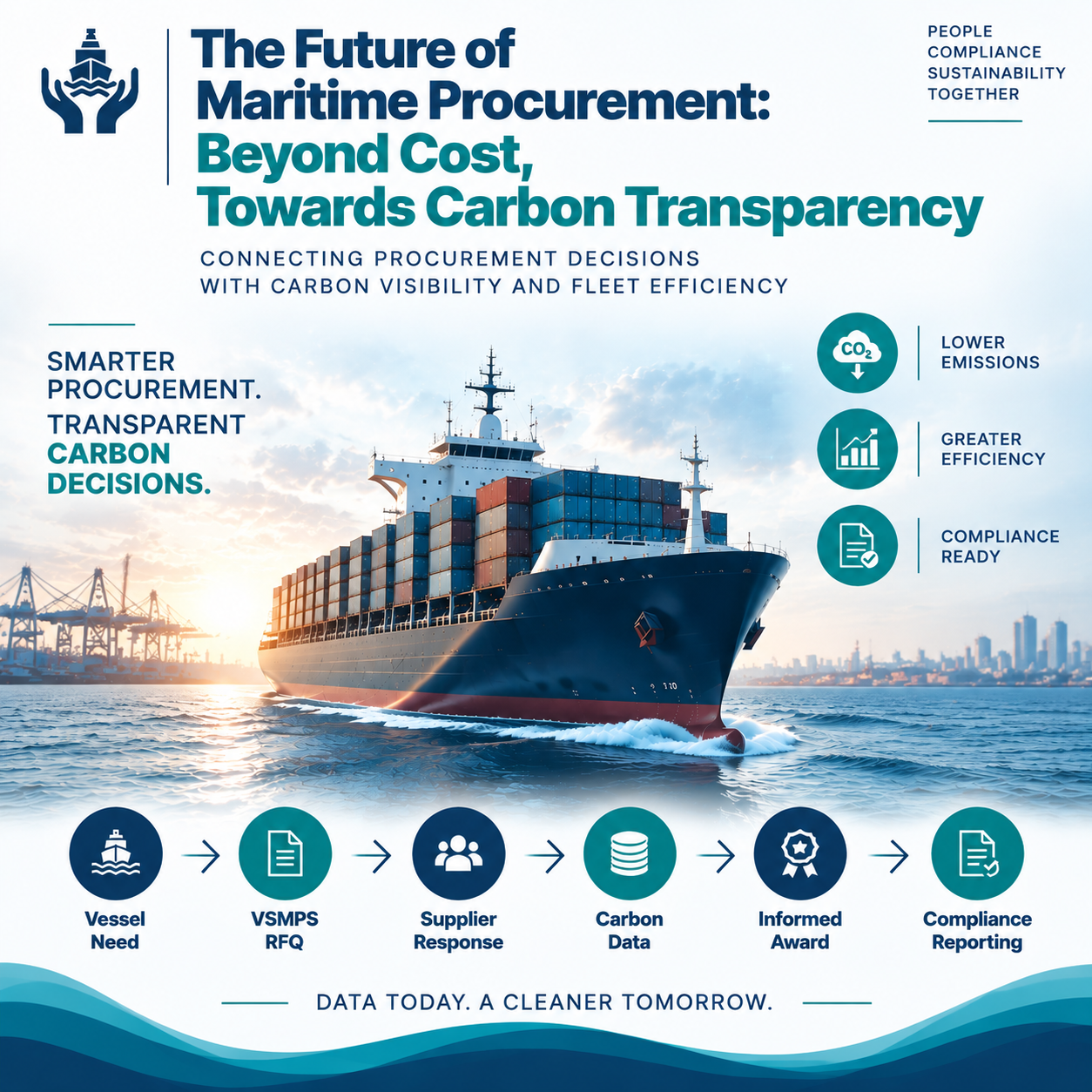
For decades, maritime procurement has run on a single axis: cost. Price, lead time and supplier reliability decided which spare part, lubricant or service contract won an order. That model is no longer sufficient. With the EU Emissions Trading System (EU ETS) now pricing shipping’s carbon output, FuelEU Maritime setting GHG-intensity targets for energy used on board, and CII/EEXI tying a vessel’s operational and design efficiency to its trading future, every procurement decision now carries a compliance and carbon footprint alongside its price tag.
The question facing owners, managers and technical superintendents is no longer just “which supplier is cheapest?” but “which supplier keeps my fleet compliant, efficient and audit-ready?” This article looks at why carbon transparency is becoming the next procurement standard, what it delivers in practice, and how Varuna Sentinels B.V. is built to close the gap between sourcing and sustainability.