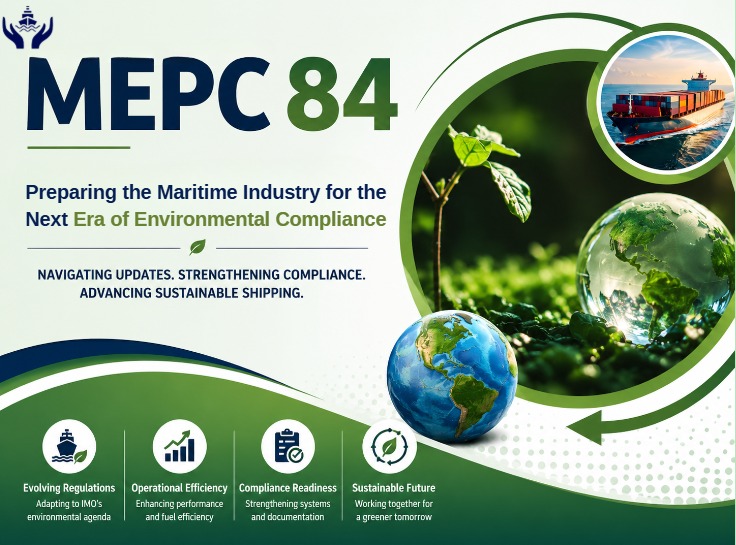
MEPC 84: Preparing the Maritime Industry for the Next Era of Environmental Compliance

The maritime industry is entering a critical phase of environmental transformation as the IMO prepares for MEPC 84 — bringing sweeping developments in decarbonization, emission monitoring and sustainability frameworks.

As a maritime ESG and compliance solutions provider, Varuna Sentinels BV closely follows IMO regulatory developments to support the shipping industry with practical, future-ready compliance solutions.

MEPC 84 and the Future of Maritime Compliance

MEPC 84 is expected to focus heavily on environmental accountability, greenhouse gas (GHG) reduction, fuel transition strategies and enhanced operational transparency. These discussions reflect the growing pressure on the maritime sector to align with global climate objectives and strengthen sustainable shipping practices.

For maritime companies, compliance is no longer only about meeting regulatory obligations — it is increasingly connected to operational efficiency, ESG performance, chartering competitiveness and long-term business sustainability.

Key Focus Areas

  • Greenhouse gas reduction and decarbonization
  • Fuel transition strategies for global shipping
  • Operational transparency and reporting
  • Stronger ESG accountability across the value chain

Business Implications

  • Compliance now drives chartering competitiveness
  • ESG performance influences finance and insurance terms
  • Operational efficiency becomes a regulatory currency

The shift: Environmental compliance is no longer a back-office obligation — it has become a front-line driver of commercial performance for global shipping.

IMO Net-Zero Framework and Decarbonization Measures

One of the key focus areas of MEPC 84 is the advancement of the IMO Net-Zero Emission Framework. Discussions are expected around:

  • Carbon intensity reduction measures — tightening GHG performance across the global fleet
  • Low and zero-carbon fuels — methanol, ammonia, hydrogen and biofuels
  • Lifecycle assessment (LCA) methodologies — well-to-wake fuel emissions accounting
  • Future economic measures and carbon pricing — market-based instruments for shipping
  • Emission reduction implementation mechanisms — how rules turn into operational outcomes

The outcome: Shipping companies will require stronger environmental management systems, emissions monitoring processes and ESG integration strategies to remain competitive.

Varuna Sentinels BV supports maritime stakeholders through ESG-focused services, sustainability support and compliance-driven operational solutions designed to help organizations navigate evolving environmental regulations efficiently.

What MEPC 84 Could Mean for Existing Efficiency Regulations

MEPC 84 is expected to review and strengthen existing IMO energy efficiency frameworks, including:

EEXI

The Energy Efficiency Existing Ship Index sets the technical efficiency benchmark for in-service vessels — revisions could tighten ratings and retrofit pressure.

SEEMP

The Ship Energy Efficiency Management Plan governs how operational efficiency is planned, tracked and improved on every vessel.

CII

The Carbon Intensity Indicator translates emissions performance into a yearly rating — directly affecting commercial reputation and risk.

These regulations have already begun reshaping vessel operations and fleet performance management. Further revisions may impact:

  • Vessel efficiency ratings — tighter thresholds and faster downgrades for under-performers
  • Voyage optimization strategies — routing, speed and cargo planning under stricter limits
  • Fuel consumption monitoring — more granular data and verification
  • Compliance reporting requirements — expanded scope and shorter cycles
  • Fleet modernization planning — renewal, retrofit and disposal decisions

Operational readiness matters: Varuna Sentinels BV assists maritime companies in strengthening documentation processes, compliance coordination and ESG operational alignment across vessel management activities.

Methane, Alternative Fuels and Emission Monitoring

The increased use of LNG and alternative marine fuels has created additional focus on methane and nitrous oxide emissions. MEPC 84 is expected to finalize guidelines related to:

Engine Load Monitoring

Standardised approaches to monitor engine load profiles — key to capturing real-world emissions across operating conditions.

Continuous Emission Monitoring (CEMS)

Onboard CEMS that produce continuous, verifiable emissions data instead of relying on calculations alone.

Onboard Emission Measurement

Procedures for measuring emissions onboard — supporting transparent reporting and regulatory verification.

Why it matters: Maritime organizations are now expected to maintain stronger environmental records, auditable reporting systems and structured compliance documentation to support regulatory verification and ESG transparency.

Onboard Carbon Capture Systems (OCCS)

MEPC 84 will also discuss guidelines for onboard carbon capture systems (OCCS) — an emerging solution for reducing vessel emissions during the transition toward cleaner fuels.

This demonstrates how the maritime industry is moving toward a combination of:

  • Operational optimization — squeezing more efficiency from existing tonnage
  • Technological innovation — capture, storage and alternative propulsion
  • Environmental accountability — transparent measurement and disclosure
  • Long-term sustainability investment — capital allocation aligned with net-zero pathways

As environmental technologies continue to evolve, companies will increasingly require structured procurement systems, supplier coordination and compliance-driven operational workflows. Through its maritime procurement and compliance ecosystem, Varuna Sentinels BV supports efficient coordination between maritime buyers, suppliers and compliance processes.

Marine Plastic Pollution and ESG Responsibility

MEPC 84 is expected to adopt further measures targeting marine plastic pollution and waste management from ships. Across the industry, ESG performance is becoming a core expectation from:

  • Regulators — tightening environmental rules at every level
  • Charterers — favouring vessels that meet ESG criteria
  • Investors — pricing climate risk into capital decisions
  • Cargo owners — pushing decarbonization into supply chains
  • Financial institutions — embedding ESG into loan and insurance terms

As ESG requirements expand, maritime companies must strengthen:

Sustainability Reporting

Structured, audit-ready disclosures aligned with global standards.

Environmental Risk Management

Identification, monitoring and mitigation of environmental risks across operations.

Operational Transparency

Real-time visibility into emissions, waste and compliance posture.

Supplier Accountability

ESG-aligned procurement and verifiable supplier performance data.

Compliance Governance

Clear ownership, escalation paths and audit trails across the organisation.

The transition: This shift creates growing demand for integrated ESG support services and compliance-driven maritime operational systems.

How Varuna Sentinels BV Supports Maritime Sustainability

As the regulatory landscape evolves, maritime companies require practical partners capable of supporting both operational compliance and long-term ESG transformation. Varuna Sentinels BV specializes in:

Maritime ESG Services

End-to-end ESG support — from data collection and materiality to investor-grade disclosures.

IHM Maintenance Support

Ongoing IHM maintenance aligned with HKC and EU SRR — keeping vessels audit-ready throughout their service life.

Compliance Coordination

Centralized compliance coordination across IMO, EU and flag-state requirements.

Procurement System Solutions

Maritime procurement (MPS) connecting buyers, suppliers and compliance into one structured workflow.

Supplier & Buyer Management

Verified supplier onboarding, ESG-aligned approval workflows and performance tracking.

Maritime Operational Support

Practical, on-the-ground support for fleet operators navigating evolving regulatory cycles.

Sustainability-Focused Services

Decarbonization, lifecycle and circular-economy services tuned to maritime business realities.

With the Hong Kong Convention entering into force and IMO environmental regulations continuing to expand, the need for auditable, verifiable and structured compliance systems has become more important than ever.

Conclusion

MEPC 84 is expected to shape the next phase of global maritime environmental regulation. From decarbonization frameworks and emissions monitoring to ESG accountability, the outcomes of this meeting will significantly influence the operational future of international shipping.

For maritime organizations, early preparation, structured compliance systems and sustainability-focused operational strategies will be essential to remain competitive in an increasingly regulated industry.

As the maritime sector moves toward a cleaner and more transparent future, Varuna Sentinels BV remains committed to supporting the industry with reliable maritime ESG and compliance solutions aligned with evolving international standards.

Contact Us

Preparing for MEPC 84? Our experts at Varuna Sentinels BV help shipowners, operators and yards build practical, audit-ready compliance and ESG systems aligned with evolving IMO requirements.

Reach out to us at contact@varuna-sentinels.com or call us at +31 20 24 0355

Visit our website: www.varuna-sentinels.com

Share this article

LinkedIn Twitter Email

Related Articles

Sustainability in Maritime Services Through Life Cycle Assessment

Read More

EU Carbon Market Reform: What's Changing & What Comes Next

Read More

Cyprus Ratifies the Hong Kong Convention

Read More

Ready to align your fleet with the next era of IMO regulation?

Schedule a Meeting Contact Us