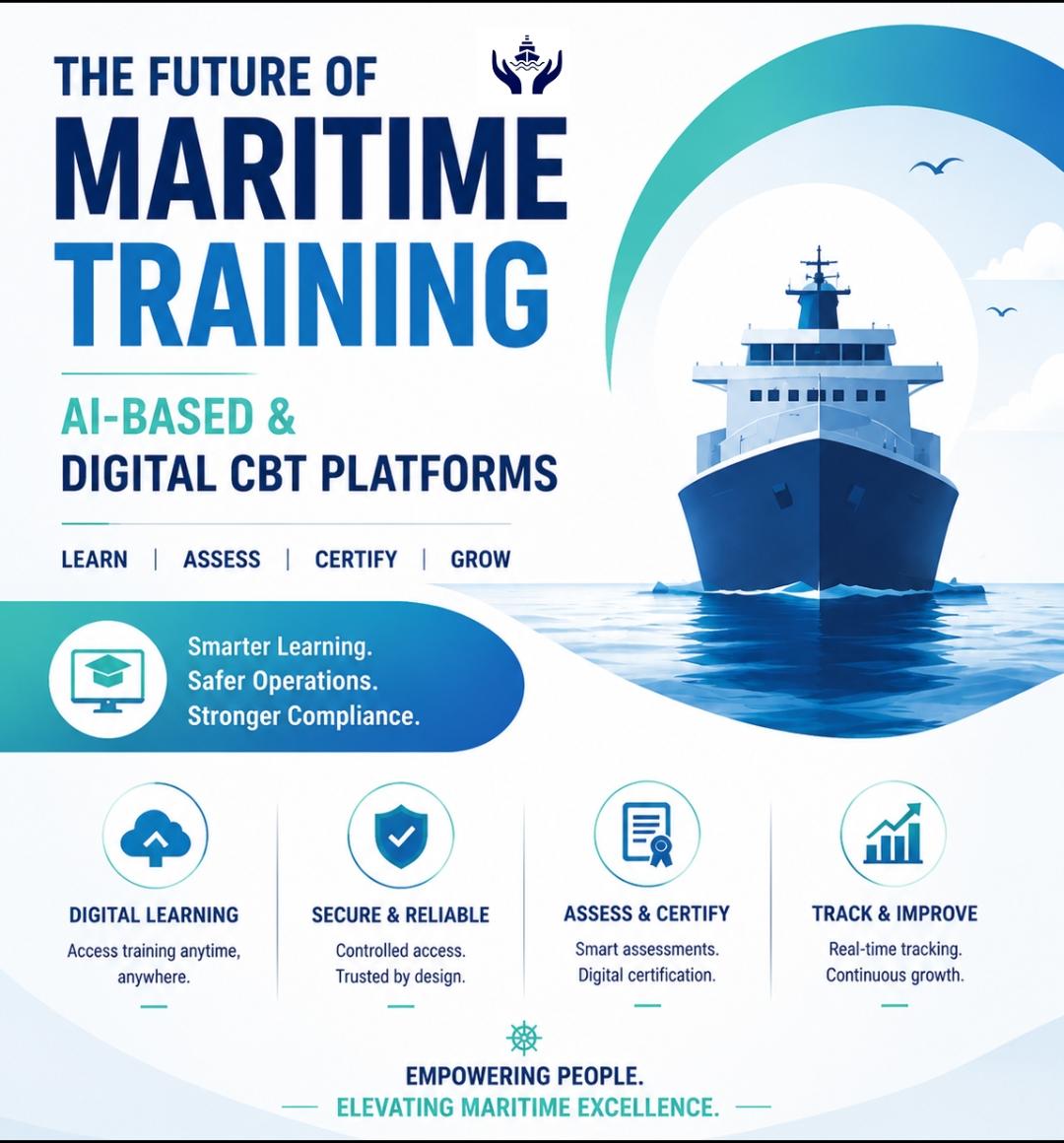
The maritime industry is evolving rapidly with increasing global regulations, operational complexity, and the need for safer and more efficient vessel operations. Shipping companies today manage multinational crews, strict compliance requirements, and continuous safety expectations across global fleets. To meet these challenges, maritime training is transforming from traditional classroom-based learning to modern digital Computer-Based Training (CBT) platforms.
In the past, maritime training was mainly conducted through classroom sessions, onboard instructions, printed manuals and periodic refresher courses. While these methods remain important, they are not always efficient for modern global shipping operations.
Traditional Training Methods
- Classroom-based sessions ashore
- Onboard instructor-led briefings
- Printed manuals and circulars
- Periodic refresher courses
What Modern Shipping Requires
- Faster training access — anytime, anywhere
- Standardized learning across global fleets
- Reliable crew-competency tracking
- Easier compliance management
- Flexible learning onboard and onshore
The bridge: Digital CBT platforms solve these challenges by bringing training into a structured, cloud-based system — one source of truth for crew learning, assessment and certification across the entire fleet.