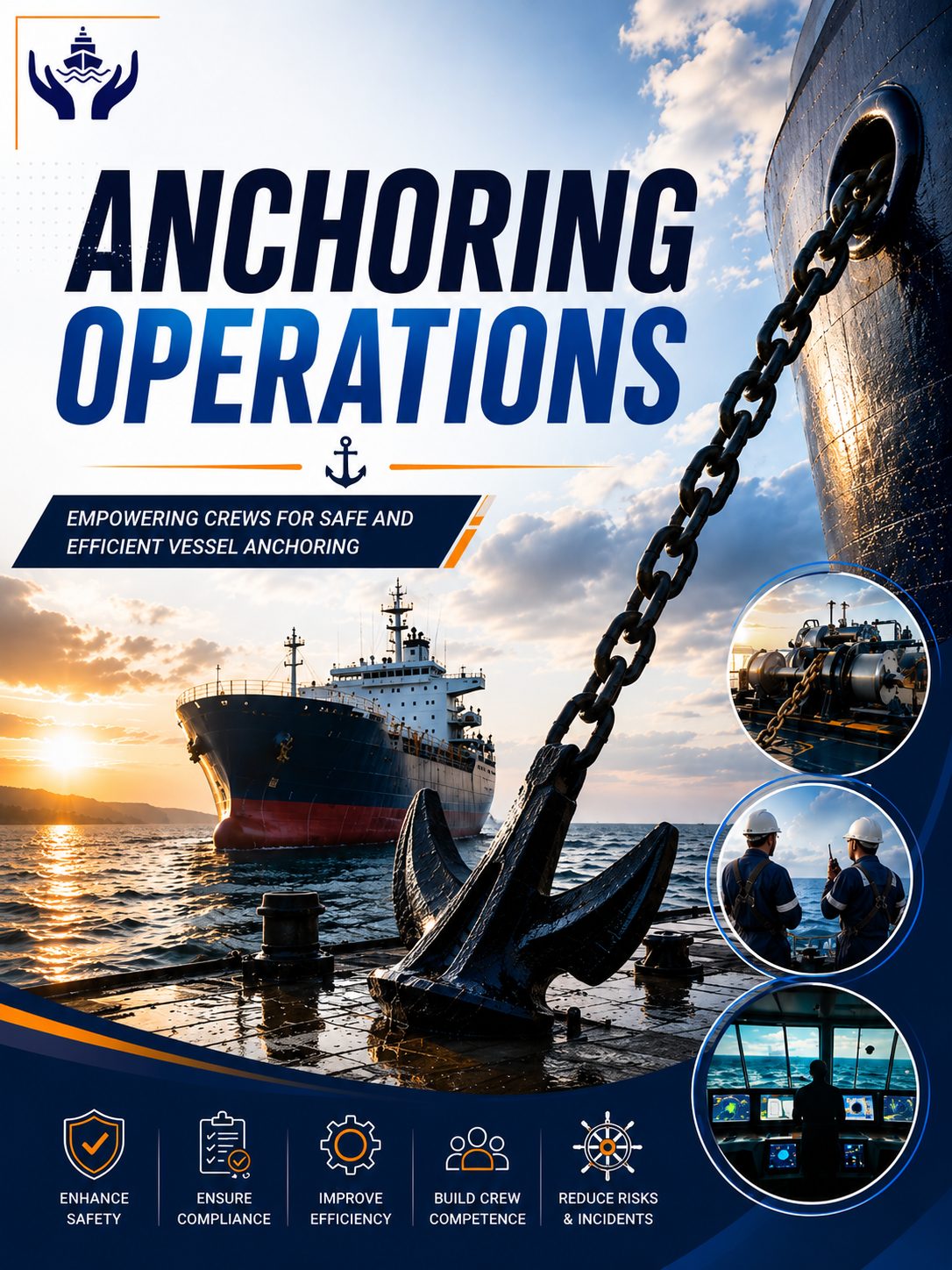
Anchoring Operations: Ensuring Safe and Efficient Vessel Anchoring

Anchoring is one of the most safety-critical operations performed onboard. The Varuna Sentinels BV Anchoring Operations CBT Module turns that complexity into confident, competent practice.

Discover how comprehensive, interactive training equips crews to plan, execute and monitor anchoring operations safely — protecting the vessel, crew and marine environment.

Why Anchoring Operations Matter

Anchoring is one of the most critical operations performed onboard a vessel. Whether a ship is waiting for berth availability, conducting cargo operations, or sheltering from adverse weather conditions, proper anchoring procedures are essential to ensure the safety of the vessel, crew, and surrounding marine environment.

The Anchoring Operations CBT Module by Varuna Sentinels BV is designed to provide maritime professionals with a comprehensive understanding of safe anchoring practices, equipment handling, risk management, and the operational procedures required during anchoring operations.

A vessel’s anchor serves as its primary means of maintaining position when not secured alongside a berth. Improper anchoring can lead to serious consequences:

What Improper Anchoring Can Cause

  • Anchor Dragging — the anchor fails to hold the vessel in place, causing it to drift from its intended position.
  • Vessel Collisions — a drifting vessel may collide with nearby ships, offshore structures, or port facilities.
  • Grounding Incidents — loss of position can cause the vessel to run aground, resulting in significant damage and delays.
  • Damage to Anchoring Equipment — incorrect handling or excessive loads can fail anchors, chains, windlasses or associated equipment.

Safety & Environmental Risks

  • Environmental Pollution — groundings or collisions may result in fuel spills and environmental contamination.
  • Serious Injuries to Crew — moving chains, heavy equipment and high-tension loads pose severe safety risks to personnel.

The bottom line: Every crew member involved in anchoring operations must understand the correct procedures, safety precautions, and emergency response actions to ensure safe and efficient vessel operations.

Learning Objectives of the CBT Module

Upon completion of this training module, participants will be able to:

  • Understand the principles of vessel anchoring — gain knowledge of how anchors work and the factors that affect their holding performance.
  • Identify the components of anchoring equipment — recognise the functions of anchors, chains, windlasses, brakes and other system components.
  • Conduct pre-anchoring safety checks — perform the inspections and preparations needed to ensure equipment readiness and operational safety.
  • Execute anchoring operations safely and efficiently — follow established procedures for safe anchor deployment, monitoring and recovery.
  • Monitor anchor performance and holding power — assess whether the anchor is effectively holding the vessel under varying conditions.
  • Recognise hazards associated with anchoring — identify risks such as snap-back zones, equipment failures and adverse weather.
  • Respond effectively to anchor-related emergencies — apply the right actions during anchor dragging, equipment malfunction or emergency recovery.

Key Topics Covered

The module is structured around six core areas that take learners from equipment fundamentals through to real-world execution and emergency readiness.

1. Understanding Anchoring Equipment

Learners are introduced to the main components of the anchoring system — understanding equipment functionality is essential for safe and effective operations:

  • Anchor types and designs
  • Anchor chain and cable arrangements
  • Windlass systems
  • Chain lockers
  • Brakes and stoppers
  • Communication equipment used during anchoring

2. Pre-Anchoring Planning

Successful anchoring begins long before the anchor is dropped. Proper planning significantly reduces operational risks. The course explains how to:

  • Assess weather and sea conditions
  • Evaluate water depth and seabed characteristics
  • Calculate appropriate anchor scope
  • Identify nearby navigational hazards
  • Review anchorage regulations and restrictions
  • Establish communication protocols between bridge and forecastle teams

3. Safe Anchoring Procedures

Learners are guided through step-by-step procedures, with special emphasis on clear communication among crew members throughout the operation:

  • Approaching the anchorage area
  • Preparing anchoring equipment
  • Releasing the anchor safely
  • Controlling chain payout
  • Securing the anchor after deployment
  • Verifying anchor holding capability

4. Monitoring During Anchorage

Anchoring does not end once the anchor reaches the seabed. Continuous monitoring ensures the vessel remains safely positioned:

  • Position monitoring techniques
  • Anchor watch responsibilities
  • Detecting anchor dragging
  • Monitoring environmental changes
  • Recording anchoring data in ship logs

5. Anchoring in Adverse Weather Conditions

Severe weather significantly increases anchoring risks. These lessons help crews maintain safety during challenging maritime conditions:

  • Heavy weather anchoring strategies
  • Increased anchor watch requirements
  • Emergency preparedness
  • Assessing anchor holding capacity
  • Actions to take if the vessel begins dragging anchor

6. Crew Safety and Hazard Awareness

Anchoring involves heavy machinery, moving chains and high-tension equipment. Crew safety remains the highest priority throughout every operation:

  • Personal Protective Equipment (PPE) requirements
  • Snap-back zones and danger areas
  • Safe positioning during anchor deployment
  • Communication and situational awareness
  • Emergency stop procedures

Common Risks Addressed

Through practical examples, real-world scenarios and interactive exercises, the CBT module prepares participants to identify and mitigate the most common anchoring risks:

Anchor Chain Failure

Excessive loads, corrosion or poor maintenance can cause the anchor chain to break or fail.

Equipment Malfunction

Mechanical or hydraulic failures in anchoring equipment can compromise safe operations.

Human Error

Incorrect procedures, lack of awareness or poor decision-making can lead to operational incidents.

Poor Communication

Misunderstandings between bridge and deck teams can result in unsafe anchoring actions.

Adverse Weather Conditions

Strong winds, currents and rough seas can reduce anchor holding effectiveness and increase risks.

Incorrect Anchor Deployment

Improper release, insufficient scope or poor positioning can prevent the anchor from setting correctly.

Personnel Injuries

Moving chains, heavy machinery and high-tension equipment can cause serious injuries if safety procedures are not followed.

Benefits of the Training

Investing in comprehensive anchoring training delivers measurable benefits across the fleet:

Improved Safety

Trained crews are better equipped to identify and manage operational risks.

Regulatory Compliance

The training supports compliance with maritime regulations and company procedures.

Operational Efficiency

Well-trained personnel perform anchoring operations more smoothly and effectively.

Reduced Equipment Damage

Correct handling practices help extend equipment service life.

Enhanced Emergency Preparedness

Crews develop the skills needed to respond quickly to unexpected situations.

Who Should Attend?

The module is designed for everyone who plans, supervises or participates in anchoring operations:

Deck Officers

Responsible for planning, supervising and executing anchoring operations.

Masters & Chief Officers

Oversee overall vessel safety and operational decision-making.

Cadets & Trainee Officers

Gain foundational knowledge and practical understanding of anchoring procedures.

Able Seafarers (Deck)

Directly participate in anchor handling and deck operations.

Bosuns

Lead deck teams and ensure safe execution of anchoring tasks.

Crew Involved in Anchoring

Anyone participating in anchoring activities benefits from enhanced safety awareness and operational knowledge.

How Varuna Sentinels Supports Crew Competency

At Varuna Sentinels, we recognise that safe anchoring operations depend not only on reliable equipment but also on well-trained and competent crew members. Our Anchoring Operations CBT Module is designed to bridge the gap between theoretical knowledge and practical onboard application through engaging, interactive and industry-relevant training.

The module helps crew members:

  • Develop a clear understanding of anchoring principles and best practices.
  • Familiarise themselves with anchoring equipment and its safe operation.
  • Improve decision-making skills during routine and emergency anchoring situations.
  • Enhance situational awareness during adverse weather and high-risk conditions.
  • Strengthen communication and teamwork between bridge and deck personnel.
  • Identify operational hazards and implement effective risk mitigation measures.
  • Build confidence in conducting anchoring operations safely and efficiently.

Through scenario-based learning, visual demonstrations and knowledge assessments, Varuna Sentinels ensures that seafarers gain practical insights that can be directly applied onboard — contributing to an improved safety culture, fewer incidents, enhanced regulatory compliance and greater operational efficiency across the fleet.

Conclusion

Anchoring may appear to be a routine shipboard activity, but it remains one of the most safety-critical operations at sea. Effective anchoring requires proper planning, equipment knowledge, crew coordination and continuous monitoring.

The Varuna Sentinels Anchoring Operations CBT Module equips maritime professionals with the knowledge and practical understanding necessary to conduct anchoring operations safely, efficiently and in accordance with industry best practices.

Invest in competency. By investing in comprehensive anchoring training, shipping companies can strengthen operational safety, reduce incidents, and ensure the protection of both personnel and assets in all operating conditions.

Contact Us

Want to build crew competency and bring safer anchoring practices to your fleet? Our experts at Varuna Sentinels BV are here to help you deploy the Anchoring Operations CBT Module.

Reach out to us at contact@varuna-sentinels.com or call us at +31 20 24 0355

Visit our website: www.varuna-sentinels.com

Share this article

LinkedIn Twitter Email

Related Articles

New SOLAS Developments for Anchor Handling Winches

Read More

The Future of Maritime Training: AI-Based and Digital CBT Platforms

Read More

SSR Live Reporting: A Practical Case Study in Real-Time Ship Recycling Operations

Read More

Ready to build crew competency in anchoring operations?

Schedule a Meeting Contact Us