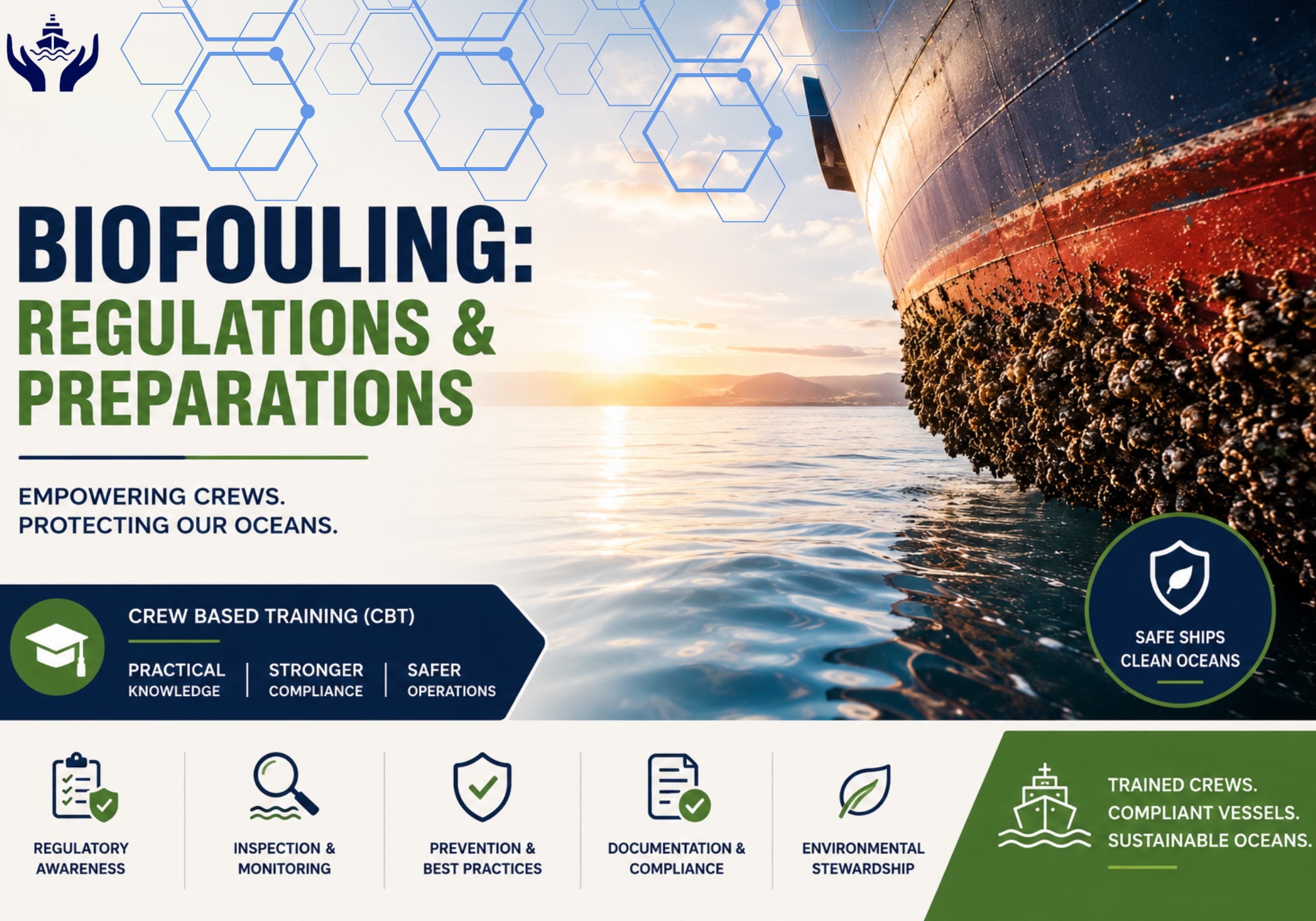
Biofouling Regulations and Preparation: A Practical Guide for Maritime Professionals

As the maritime industry advances toward greater sustainability, biofouling management has become a critical aspect of vessel operations — affecting performance, fuel consumption and the spread of invasive aquatic species.

Discover how the Varuna Sentinels BV “Biofouling: Regulations and Preparations” CBT Module equips crews to manage biofouling risk while supporting environmental stewardship and regulatory compliance.

Understanding Biofouling and Its Impact

Biofouling occurs when marine organisms such as algae, barnacles, mussels and microorganisms attach themselves to the underwater surfaces of a vessel. While often viewed as a routine maintenance concern, biofouling carries significant operational, environmental and economic implications.

Recognizing its growing importance, Varuna Sentinels BV has developed the “Biofouling: Regulations and Preparations” Crew Based Training (CBT) Module — equipping maritime professionals with the knowledge to manage biofouling risks while supporting environmental stewardship and compliance.

The Presence of Biofouling Can Result In

  • Increased hydrodynamic resistance
  • Higher fuel consumption and operating costs
  • Increased greenhouse gas emissions
  • Reduced vessel speed and efficiency
  • Greater maintenance and cleaning requirements
  • Transfer of invasive aquatic species between regions

Why It Matters

  • Even a thin layer of marine growth can negatively affect vessel performance
  • Effective management is essential for modern, efficient shipping operations
  • It directly supports decarbonisation and environmental responsibility goals

The takeaway: Biofouling is no longer just a hull-cleaning issue — it is a performance, emissions and biosecurity concern that touches every part of vessel operations.

Regulatory Focus on Biofouling

The global maritime community increasingly recognizes biofouling as a major pathway for the introduction and spread of invasive aquatic species. To address this, the International Maritime Organization (IMO) has established guidelines for the control and management of ships’ biofouling, encouraging vessel operators to implement:

  • Biofouling Management Plans — structured, vessel-specific control strategies
  • Regular inspection programs — to monitor fouling before it accumulates
  • Effective maintenance strategies — scheduled cleaning and upkeep
  • Appropriate record-keeping practices — evidence of compliance
  • Preventive and corrective control measures — acting early and decisively

Regional momentum: Countries such as Australia and New Zealand have implemented stringent biosecurity requirements for vessels entering their waters — and similar frameworks are expected to emerge across other maritime regions as environmental protection gains importance.

The Importance of Crew Awareness

Successful biofouling management is not solely dependent on technology or maintenance programs. It requires active participation from onboard personnel who monitor vessel conditions, maintain records and support compliance efforts. A knowledgeable crew can help:

  • Identify early signs of marine growth — before fouling becomes extensive
  • Support efficient maintenance planning — aligning cleaning with operations
  • Ensure proper documentation practices — accurate, audit-ready records
  • Reduce operational inefficiencies — protecting speed and fuel performance
  • Enhance environmental performance — lowering emissions and biosecurity risk
  • Improve inspection readiness — confident, prepared port-state engagement

Compliance begins with people: By increasing crew awareness, shipping companies strengthen their compliance culture while improving operational performance and sustainability outcomes.

Best Practices for Effective Biofouling Management

Managing biofouling effectively requires a proactive, systematic approach that combines prevention, monitoring, maintenance and crew awareness. The CBT Module introduces crews to four practical measures:

Regular Inspections

Routine inspections identify early signs of marine growth before extensive fouling develops. Particular attention is given to niche areas such as sea chests, propellers, rudders, thruster tunnels and intake gratings, where biofouling accumulates more rapidly.

Preventive Maintenance

A well-planned maintenance program is critical to controlling biofouling. Scheduled hull cleaning, underwater inspections and timely maintenance activities help prevent excessive marine growth and maintain vessel performance.

Effective Antifouling Systems

Selecting and maintaining the right antifouling coatings is fundamental. Choosing the appropriate coating based on vessel type, trading routes and operating conditions significantly reduces fouling accumulation and extends maintenance intervals.

Accurate Documentation

Comprehensive records of inspections, maintenance, cleaning operations and coating applications are essential for demonstrating compliance — and provide valuable evidence during inspections and audits.

How Varuna Sentinels BV Supports Biofouling Compliance

As environmental regulations continue to evolve, ensuring onboard personnel understand their responsibilities is essential for compliance and operational efficiency. Through its “Biofouling: Regulations and Preparations” CBT Module, Varuna Sentinels BV helps crews understand:

  • The causes and consequences of biofouling
  • International and regional regulatory requirements
  • Inspection and monitoring procedures
  • Preventive and corrective management measures
  • Documentation and compliance expectations
  • Environmental and operational best practices

The outcome: By combining regulatory awareness with practical operational guidance, Varuna Sentinels BV enables shipping companies to strengthen compliance, improve vessel efficiency and support environmentally responsible operations.

Building Knowledge Through Training

As biofouling regulations become increasingly prominent, continuous learning and crew awareness are essential. Training helps transform regulatory requirements into practical onboard actions — enabling crews to understand not only what is required, but also why these measures matter.

The Biofouling: Regulations and Preparations CBT Module bridges the gap between regulatory expectations and onboard implementation. Through engaging, practical learning content, participants gain the confidence and competence needed to support effective biofouling management throughout a vessel’s operational lifecycle.

From regulation to routine: Effective training turns compliance obligations into everyday operational habits that protect the vessel, the environment and the bottom line.

Conclusion

Biofouling management is no longer just a maintenance concern — it is a critical component of modern maritime compliance, operational efficiency and environmental stewardship. As regulations evolve and expectations increase, vessel operators must ensure their crews possess the knowledge required to manage biofouling risks.

Through the “Biofouling: Regulations and Preparations” Crew Based Training Module, Varuna Sentinels BV equips maritime professionals with the skills and understanding needed to support compliance, improve vessel performance and contribute to a more sustainable future for global shipping.

Invest in awareness today. By building crew knowledge now, the maritime industry can create safer, cleaner and more efficient operations for tomorrow.

Contact Us

Want to strengthen biofouling awareness and compliance across your fleet? Our experts at Varuna Sentinels BV are here to help you roll out the “Biofouling: Regulations and Preparations” CBT Module for your crews.

Reach out to us at contact@varuna-sentinels.com or call us at +31 20 24 0355

Visit our website: www.varuna-sentinels.com

Share this article

LinkedIn Twitter Email

Related Articles

The Future of Maritime Training: AI-Based and Digital CBT Platforms

Read More

Anchoring Operations: Ensuring Safe and Efficient Vessel Anchoring

Read More

Circular Maritime Economy: Creating a Sustainable and Traceable Maritime Ecosystem

Read More

Ready to build biofouling awareness across your crews?

Schedule a Meeting Contact Us