Computer Based Training · Article

OICNW Class 3 Training: A Comprehensive Guide to Navigation, Watchkeeping and Shipboard Safety

36 Computer-Based Training modules on the Varuna Sentinels B.V. platform — from chartwork and collision avoidance to cargo safety, emergency response and environmental protection.

Safe vessel operations depend on deck officers who understand navigation, maintain an effective watch, manage operational risks and respond to emergencies. These responsibilities require technical knowledge, practical judgement and clear communication.

What Is OICNW Class 3 Training?

  • 36learning modules on the VS CBT platform
  • 6connected learning areas, from the bridge to the cargo deck
  • 8key benefits for cadets and deck personnel
  • CBT → Simulatortheory linked to practical exercises and competency assessments

Officer in Charge of a Navigational Watch (OICNW) Class 3 training provides a foundation for understanding these duties. It connects navigation theory with the wider responsibilities of a deck officer, including cargo handling, vessel stability, environmental protection and shipboard safety.

The OICNW Class 3 learning material on Varuna Sentinels B.V.’s Computer-Based Training (CBT) platform comprises 36 modules, covering core technical subjects, operational responsibilities and preparation for practical exercises and competency assessments.

Why Should You Take OICNW Class 3 Training?

1 Build a Strong Foundation in Navigation

A navigational watchkeeper must know where the vessel is, where it is heading and whether its intended track remains safe.

The training covers terrestrial and coastal navigation, celestial navigation, chartwork and position fixing. These subjects develop an understanding of how positions are established using visual observations, charted features, radar information and celestial bodies.

Voyage and passage planning connects this knowledge with route selection, navigational limits, contingency arrangements and passage monitoring. Together, these topics reinforce the importance of planning a voyage and continuously checking the vessel’s progress.
2 Understand Electronic Navigation Systems

Electronic equipment provides essential navigational information, but officers must understand its settings, accuracy and limitations. The training includes:

  • Electronic navigation systems
  • Electronic Chart Display and Information System (ECDIS)
  • Radar navigation and radar plotting
  • Automatic Radar Plotting Aids (ARPA)

These modules address the interpretation of position and target information, the importance of appropriate equipment settings and the need to verify information through independent means.

Understanding what a system displays—and what may affect that display—is essential to informed bridge decisions.
3 Strengthen Collision-Avoidance and Watchkeeping Knowledge

Safe watchkeeping requires continuous assessment of traffic, visibility, vessel movement and navigational hazards.

The COLREGs module addresses the International Regulations for Preventing Collisions at Sea, while bridge watchkeeping examines watch organisation, handover, monitoring and escalation.

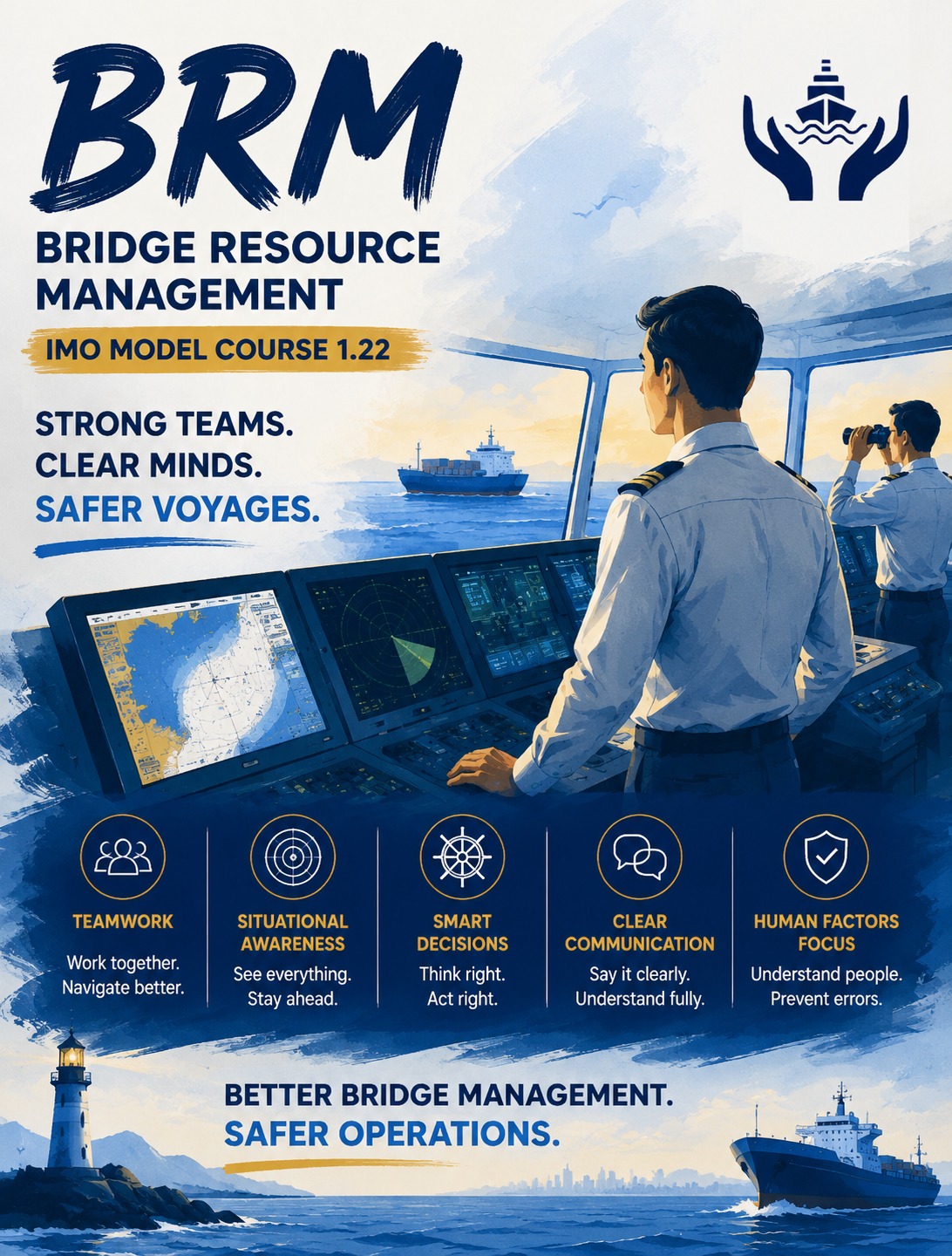
Bridge Resource Management adds the teamwork required to use available personnel, equipment and information effectively. These subjects help learners connect collision-avoidance knowledge with the practical discipline of maintaining a navigational watch.
4 Understand How Weather and Water Conditions Affect a Vessel

Weather, tides and currents influence route planning, vessel movement and available depth.

The meteorology and oceanography module introduces the interpretation of weather information. The tides, tidal streams and currents module examines their relevance to navigation, including the relationship between charted depth, tidal height and the vessel’s depth requirements.

Ship manoeuvring and handling extends this learning to the vessel’s response to helm, propulsion, wind, water and shallow-water conditions.
5 Develop Knowledge Beyond the Bridge

A deck officer’s responsibilities extend to cargo operations, seaworthiness, emergency preparedness and safe working practices.

The training therefore includes ship stability, construction, cargo handling, dangerous goods, marine communications, environmental protection and maritime administration. This broader knowledge helps learners understand how decisions in one area can affect the safety of the whole vessel.
What Does the OICNW Class 3 Training Cover?

The 36 modules provide a connected learning framework across the following areas.

Navigation and Passage Planning

The navigation modules cover:

  • Terrestrial and coastal navigation
  • Celestial navigation
  • Chartwork and position fixing
  • Voyage and passage planning
  • Electronic navigation systems
  • ECDIS
  • Radar navigation and radar plotting
  • ARPA
  • Meteorology and oceanography
  • Tides, tidal streams and currents
  • Ship manoeuvring and handling

These subjects connect position accuracy, route planning, equipment interpretation and environmental conditions.

Watchkeeping, Leadership and Teamwork

The training addresses COLREGs, bridge watchkeeping and Bridge Resource Management, supported by leadership, teamwork and personnel management.

The focus is on maintaining awareness, exchanging information, coordinating tasks and recognising when a situation requires additional support or escalation.

Ship Stability, Construction and Cargo Operations

Ship stability introduces the principles that influence a vessel’s ability to remain upright and maintain seaworthiness.

Ship construction and naval architecture examine structural members and compartment arrangements. Cargo handling, stowage and securing connect cargo distribution with stability, structural loading and the prevention of cargo movement.

The dangerous goods and IMDG Code module introduces the hazards associated with dangerous cargo and the importance of classification, stowage, segregation and response information.

Marine Communications and Emergency Response

The learning material covers:

  • Marine communications and IMO Standard Marine Communication Phrases (SMCP)
  • GMDSS awareness and maritime communications
  • Search and rescue and the IAMSAR Manual
  • Emergency procedures and response
  • Personal survival and survival craft
  • Fire prevention and firefighting
  • Medical first aid

These modules explain how communication, defined responsibilities and established procedures support coordinated action during an emergency.

Environmental Protection, Safety and Administration

Marine environmental protection and MARPOL introduce pollution-prevention responsibilities. Shipboard and occupational safety address the risks associated with working on board and the importance of controlled working procedures.

Maritime law and international conventions provide context for shipboard obligations, while ship business, documentation and administration examine the records and documents supporting vessel operations.

Supporting Knowledge and Practical Preparation

Applied mathematics for navigation and applied marine science reinforce the calculations and scientific principles used throughout the course.

The final modules cover navigation simulator training, radar and ARPA simulator exercises, shiphandling simulator exercises and practical OICNW competency assessments. They connect theoretical learning with preparation for demonstrating skills in practical settings.

Why Is This Knowledge Important in Maritime Operations?

Shipboard decisions involve several connected factors. An officer may need to assess traffic movement while monitoring position, available depth, weather and the vessel’s handling characteristics.

Example · Coastal passage

A coastal passage requires more than following a planned route. The watchkeeper must verify the vessel’s position, consider tidal conditions, monitor surrounding traffic and recognise whether changing circumstances require action.

Example · Cargo operations

Similarly, cargo operations require an understanding of how loading, discharge and securing arrangements affect stability and structural condition.

The value of OICNW training lies in helping learners connect these subjects and understand their operational consequences.

From Computer-Based Learning to Practical Competence

CBT provides a structured way to study technical concepts and revisit subjects that require further attention. It supports preparation for practical training by establishing the knowledge needed to understand exercises, follow instructions and evaluate decisions.

  • 1CBT study & revision
  • 2Simulator exercises
  • 3Approved training & sea service
  • 4Competency assessment

The OICNW Class 3 material recognises this progression through its simulator and competency-assessment modules.

Important: Practical competence must also be demonstrated through the applicable approved training, sea service and assessment arrangements. The CBT material supports that preparation; completion alone does not establish eligibility for a Certificate of Competency.

How Varuna Sentinels B.V. Supports Maritime Knowledge Development

Varuna Sentinels B.V.’s CBT platform brings the OICNW Class 3 subjects into a structured digital learning format.

Across 36 modules, the material connects navigation, vessel operations, safety, communications and practical preparation. This enables learners to approach individual subjects systematically while understanding how they contribute to a deck officer’s wider responsibilities.

For maritime organisations, the material can support technical revision and knowledge development among cadets and deck personnel.

Key Benefits of OICNW Class 3 Training

  • Build navigation and position-fixing knowledge
  • Understand passage-planning and monitoring principles
  • Recognise the capabilities and limitations of navigation equipment
  • Reinforce COLREGs and safe watchkeeping practices
  • Strengthen bridge communication and teamwork awareness
  • Improve understanding of stability and cargo operations
  • Develop emergency-response and pollution-prevention knowledge
  • Prepare for simulator exercises and practical competency assessments

Conclusion

OICNW Class 3 training brings together the knowledge required to understand navigational watchkeeping and the wider duties of a deck officer. Its scope extends from chartwork and collision avoidance to cargo safety, emergency response and environmental protection.

Through its 36-module learning material, Varuna Sentinels B.V.’s CBT platform supports structured study and revision, helping maritime learners connect technical principles with shipboard responsibilities.

Explore OICNW Class 3 training with Varuna Sentinels B.V. and strengthen the knowledge that supports safe navigation and responsible vessel operations.

Explore Computer Based Training

Ready to Simplify Maritime Compliance?

Latest from our Recent Events

Our newest videos — auto-updating straight from the Varuna Sentinels YouTube channel.

Real-Time Marine Intelligence

Follow Varuna Sentinels BV

IHM Maintenance, HKC, EUSRR, MEPC, PFAS, FuelEU & LCA — delivered the moment we publish. Join the global maritime community across all five VS channels.